Credit: Randall De Chavez
By Katie Neith
A group of students from four Los Angeles-area universities, including Caltech, came together last summer with the shared goal of building non-scientists’ understanding of quantum science and its applicability and use throughout society.
“The public has been led to believe that quantum science is this really funky, almost magical, mystical thing that exists,” says Madison Howard, a physics graduate student at Caltech. “We wanted to help demystify quantum science by hosting events where people could learn about what it actually means for something to be quantum in a meaningful and accurate way.”
Credit: Whitney Clavin
Inspired by the International Year of Quantum Science and Technology, a worldwide initiative to increase public awareness of quantum science and its applications, the team of students from Caltech, USC, UCLA, and Chapman University developed a 10-week series called Summer of Quantum in LA. At Caltech, Howard worked with fellow graduate students Huma Jafree, Taylor Knapp, and Thomas Zacharias to create engaging programming that explained quantum concepts such as superposition and entanglement to people of all ages and expertise levels.
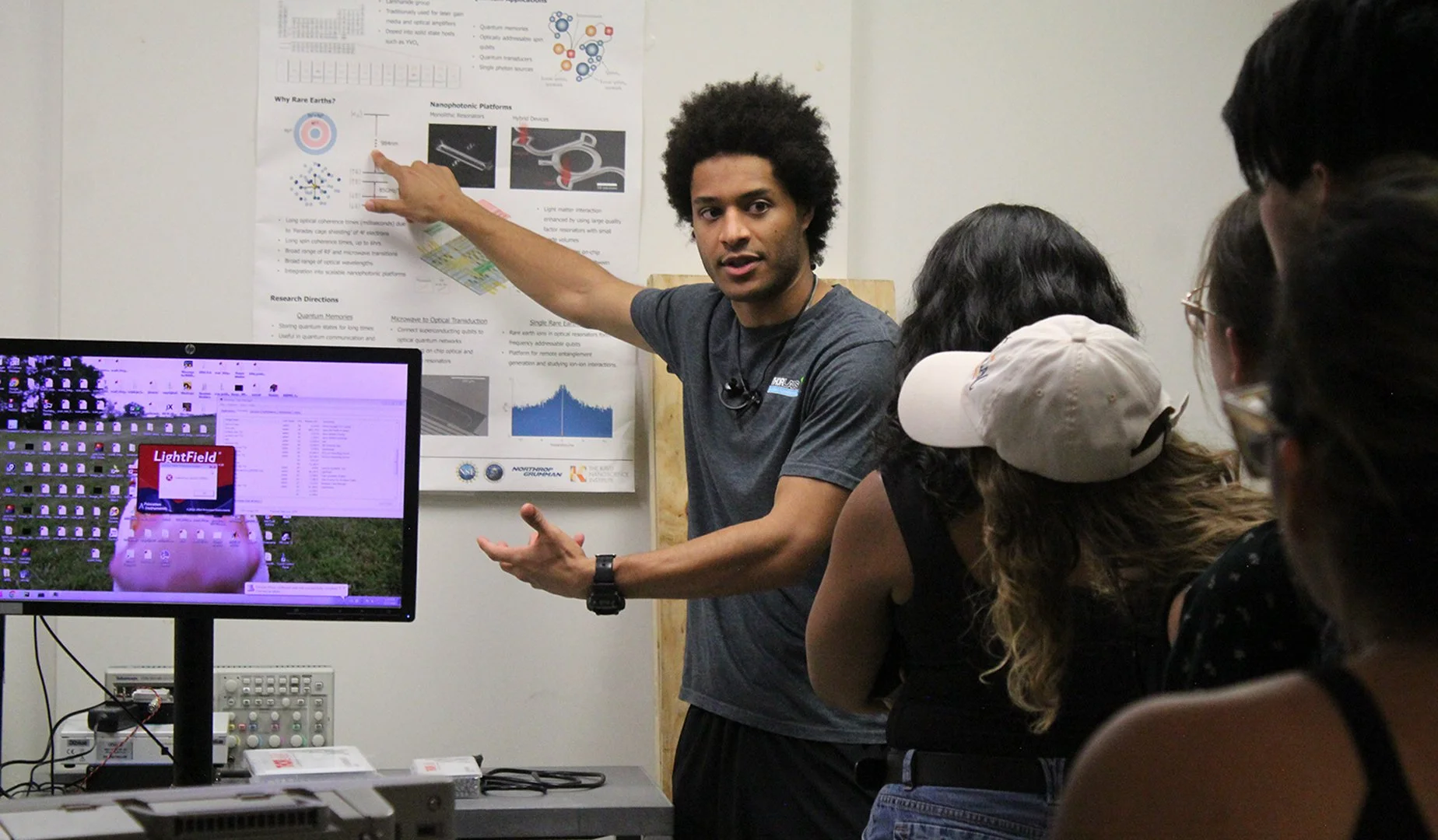
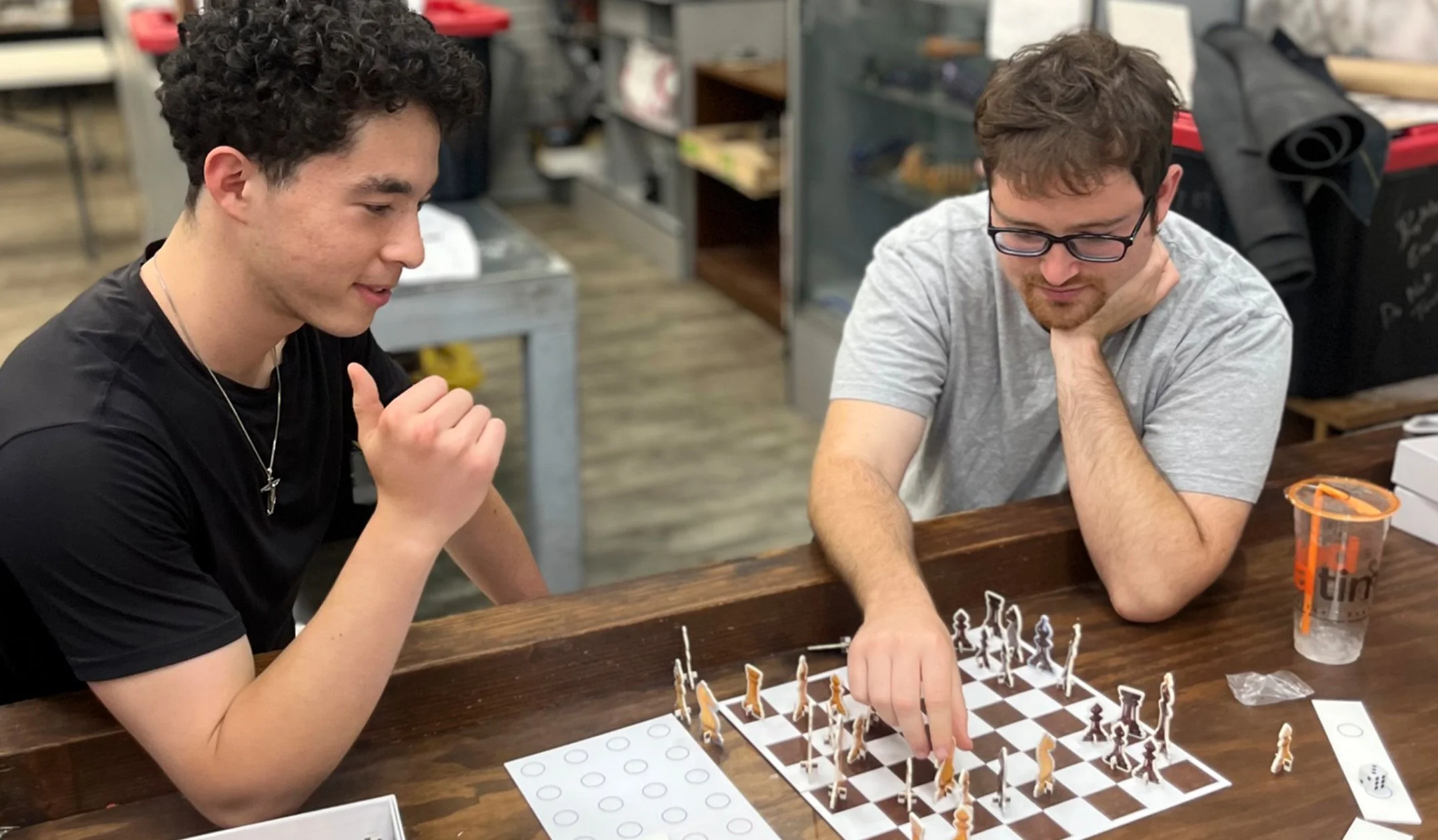
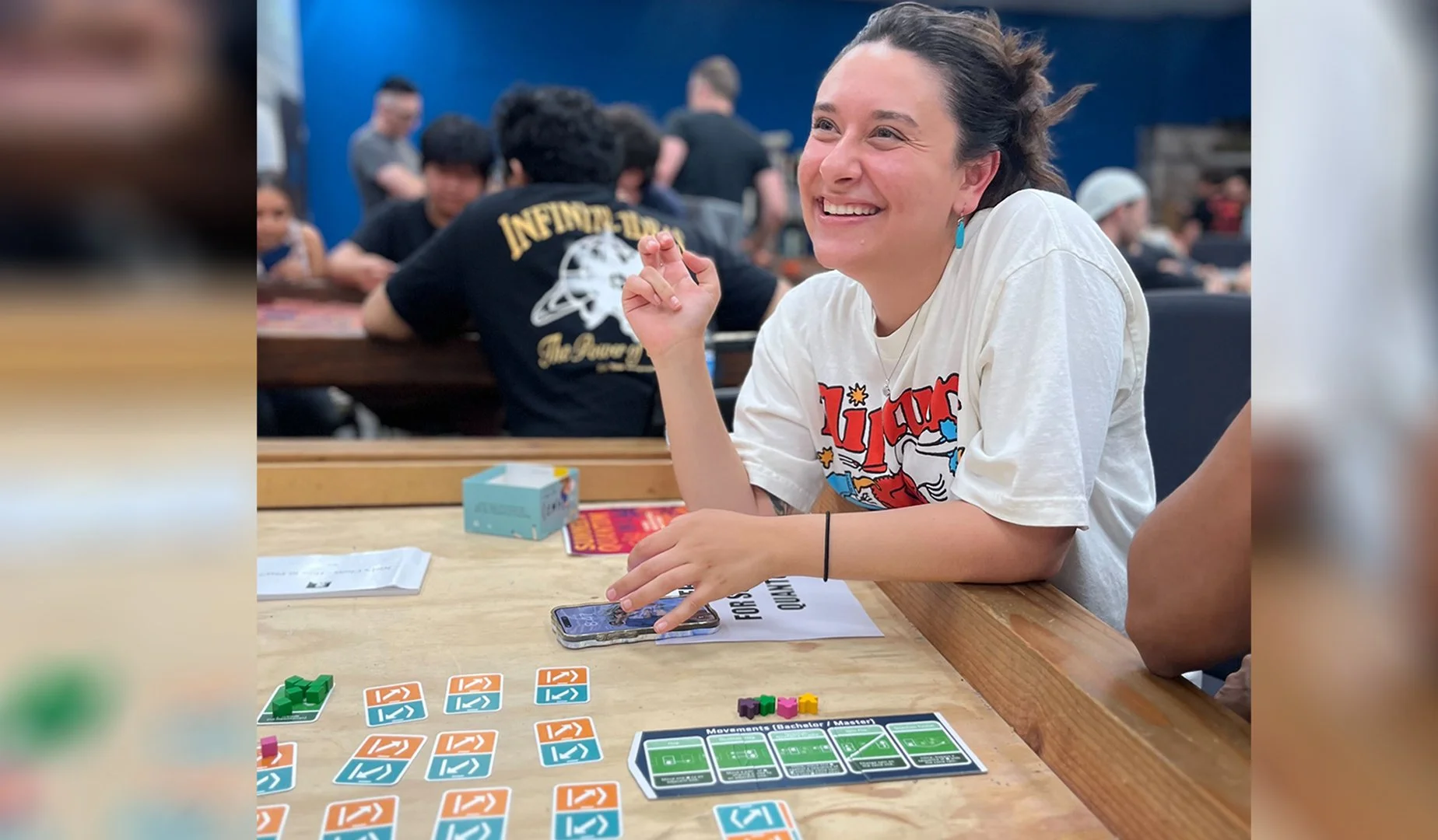
June events included “Quantum for Everyone,” a public talk in which 80 guests experienced hands-on demonstrations led by Frank Rice, lecturer in physics and manager of Caltech’s sophomore physics lab, and attended short, accessible talks about the frontiers of quantum research from graduate students Piero Chiappina and Hannah Manetsch, and postdoc Lisa Drummond. Forty participants also visited Caltech labs that perform pioneering work in quantum science, including the Nonlinear Photonics Laboratory led by Alireza Marandi, professor of electrical engineering and applied physics. Additionally, Howard helped host a quantum-themed board game night at Odyssey Games in Pasadena.
In July, the team welcomed more than 150 children and adults to campus for “Quantum for Kids,” which featured demonstrations and interactive activities for young learners led by students from Caltech, USC, and Chapman. Events at local bars also brought together those studying quantum science with curious members of the community in a casual atmosphere.
Credit: Whitney Clavin
“We wanted to have good outreach and awareness about what it means to be on the cutting edge of quantum research and really build a community around it, both with people who are involved and people who are interested,” Howard says. “Organizing so many different types of events gave us the opportunity to meet people where they’re at but also to tailor the content toward different backgrounds and interests.”
Meanwhile, Howard and Zacharias said the planning process not only helped them grow their quantum network across universities but also strengthened their connections on campus.
“We had a really positive response and saw that so many people, from students to professors to the administration, want to support events where we are trying to bridge the gap between scientists and nonscientists,” says Zacharias, who estimates that at least 50 members of the Caltech community helped make Summer of Quantum a success.
He adds that it is crucial for students to develop communication skills so they can discuss their research in an accessible manner. “We are doing things that can hopefully help society in different ways, such as impacting health by creating better medical therapies or by improving computational power,” Zacharias says. “All of us are trying to push quantum science and technology further so it can be useful for everyday people.”