
#SoCaltech: Paolo Sanchez
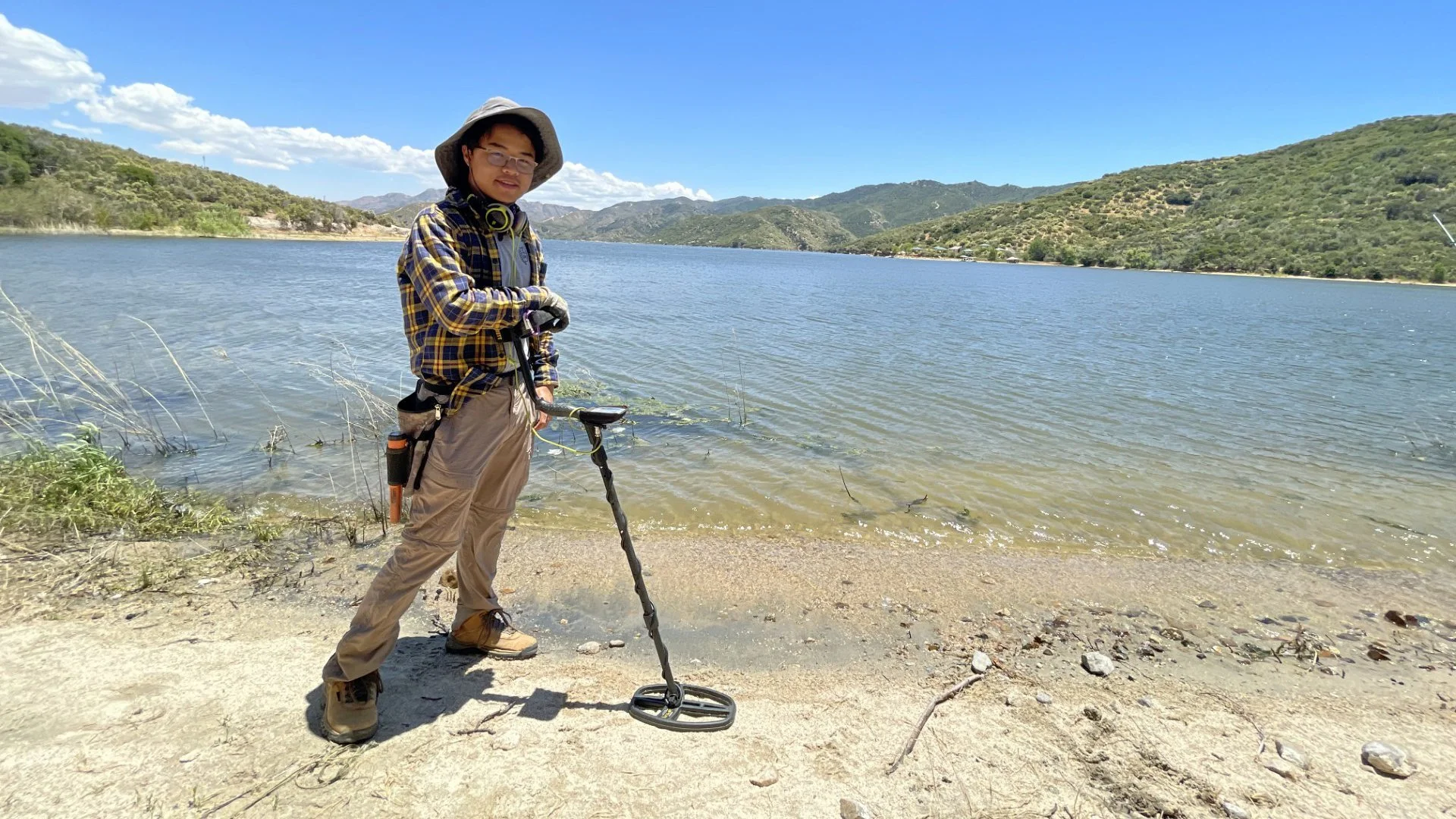
“It all started in kindergarten. I was the kid who would come home with rocks in his pockets. One of my classmates had a simple field guide to rocks and minerals, with pictures of gems and fossils. I was amazed that the earth could produce materials like that, and I wanted to understand where they came from. From that point on, I knew I wanted to pursue some form of science.
Mineral hunting, or rockhounding, has been a pastime of mine for most my life, yet all my hobbies have to do with going outside in search of something. In essence, it’s practically treasure hunting. When I was 11, I stumbled across metal-detecting videos on YouTube and that sparked a whole new curiosity. I saved up to buy my own detector, and I’ve been doing it ever since. Subsequently, I’ve developed an interest in gold prospecting and fossil hunting. Nowadays, I’ve adopted a new hobby of hunting for meteorites in remote dry lakebeds. Over the years, I’ve found all kinds of things—coins more than 100 years old, silver rings, gold nuggets, chondritic meteorites, gemstones like aquamarine, garnet, ruby, and tourmaline. Some of the minerals I’ve collected are quite rare, occurring in only a handful of places in the world.
For me, the value of these materials goes far beyond their rarity or simply monetary worth. Every object has a story. A hundred-year-old coin, for example, isn’t just metal—it carries a history with it. The same is true for meteorites or rare minerals. If you take the time to document where something was found and understand its historical or geological context, it becomes a small piece of a much larger system. Finding a rare mineral in a particular location is fun, but it raises important questions: What does this tell us about Earth’s history? What processes led to its formation? Why do I find it only in certain areas? Those are exactly the kinds of questions that are central to my research.”
Paolo Sanchez is a graduate student in geochemistry whose research focuses on the formation and development of pegmatites—coarse-grained igneous rocks that can contain lithium and gem minerals— and the synthesis of gemstones to understand how geological materials get their color.
#SoCaltech is an occasional series celebrating the diverse individuals who give Caltech its spirit of excellence, ambition, and ingenuity. Know someone we should profile? Send nominations to magazine@caltech.edu.