
Meet Caltech's 2025 Distinguished Alumni
By Chris Quirk (Awardee interviews conducted by the Caltech Heritage Project.)
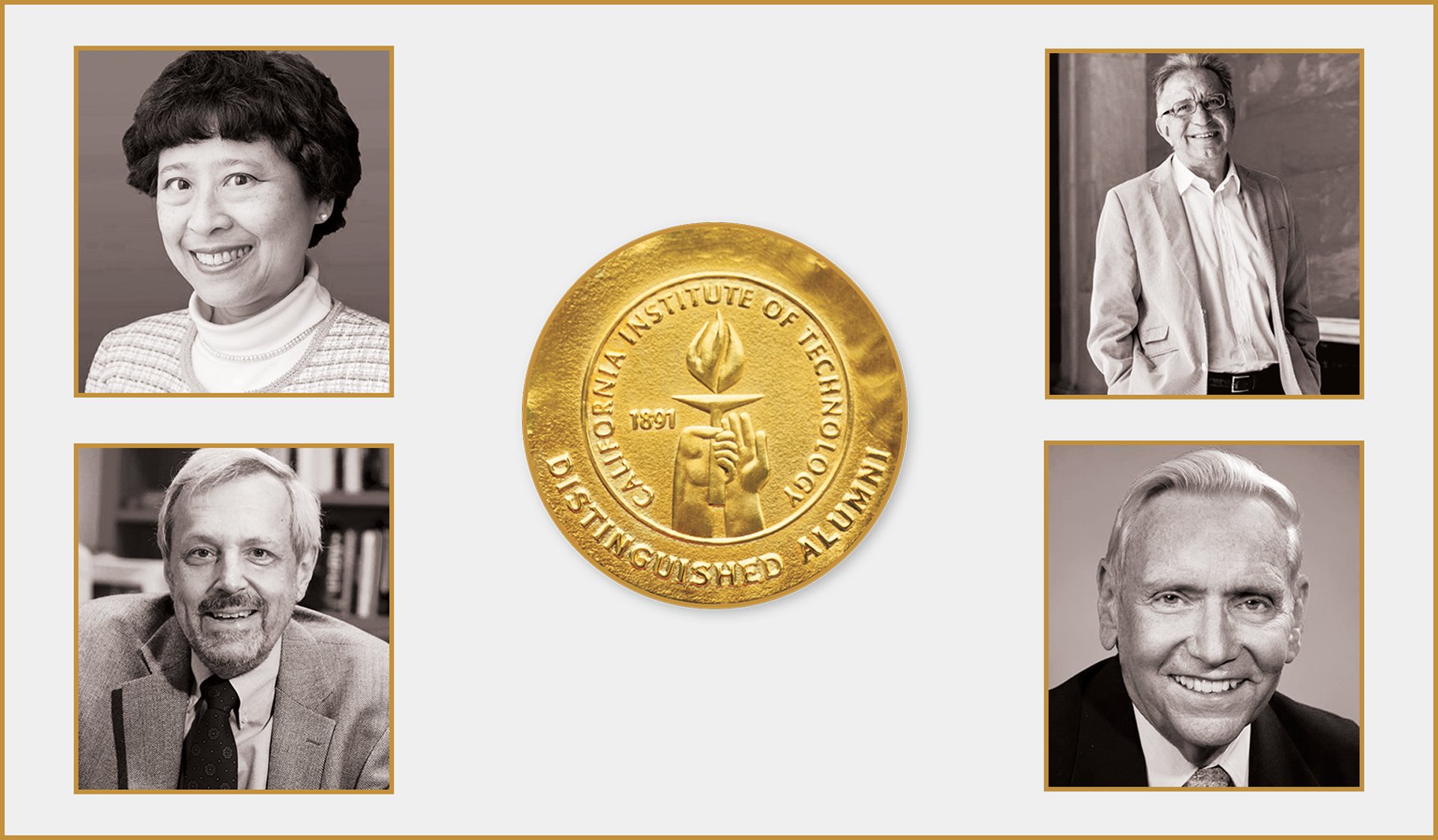
Caltech’s annual Distinguished Alumni Awards—the highest honor the Institute bestows upon its graduates—recognize “a particular achievement of noteworthy value, a series of such achievements, or a career of noteworthy accomplishment.” The 2025 luminaries include a trailblazer who helped launch the field of multifunctional structural materials and was one of the first women to graduate from the Institute; a multihyphenate mathematician and medical doctor whose contributions have advanced mathematical physics, biomedical sciences, and science communication; a biochemist whose breakthroughs in sequencing bacteriophage DNA led to technologies that extended millions of lives worldwide; and an influential theoretical and computational chemist whose work has established foundational methods for analyzing chemical interactions.
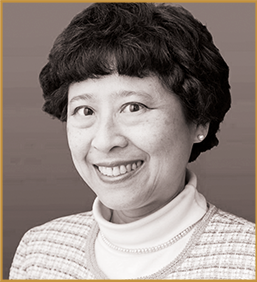
Credit: Courtesy Deborah Chung
Deborah D.L. Chung (BS ’73, MS ’73)
Materials Scientist
For her research that helped launch the field of multifunctional structural materials; for her contributions to the development of smart concrete and other nanostructured materials with intrinsic capabilities potentially useful to society; and for her stalwart efforts to diversify science, technology, engineering, and mathematics.
A materials scientist with a fearless creative streak, Deborah Chung has forged a path in the field of structural materials that few had previously pursued. While researchers had historically investigated the mechanical properties and durability of such materials as concrete, steel, and fiber composites, Chung opted to explore these materials’ hidden functional properties, such as sensing, energy generation, energy storage, vibration damping, and electromagnetic shielding, among others. “It sounded crazy, but I embarked on that direction of research, and that’s how I got into multifunctional structural materials,” she says. “I found it to be a gold mine.”
Chung, who was born in Hong Kong, also made history as one of the first four women to earn an undergraduate degree from Caltech in 1973. She transferred from Wellesley College following her first year. “I really liked the friendliness, the personal touch at Caltech,” she recalls. “People know you, and it feels like a big family. Even though I was very much a minority as a girl there, I didn’t feel special or abnormal at all. It was during graduation that I realized that they were making it kind of a big deal.”
Chung is now the SUNY Distinguished Professor in the Department of Mechanical and Aerospace Engineering at the University at Buffalo, The State University of New York, and director of its Composite Materials Research Laboratory, a facility she created in 1989. Her work has led to the development of materials such as smart concrete, which can detect deformation levels on its own without any built-in sensors, and her insights have opened new avenues for using structural materials.
At Caltech, Chung studied electrical engineering, enrolling in Carver Mead’s landmark Integrated Circuits course in 1972. However, it was her work with Pol Duwez, professor of applied physics and materials science, studying amorphous materials that served as a springboard into the field in which she is now an internationally recognized leader. “Through his research, I came to realize how much science and technology is embodied in materials science,” she says. “The breadth of basic scientific education and the early experience in research are two very valuable things that Caltech provided me and that have been highly important for my career. The basic science enabled me to learn new things throughout my journey in science.”
Chung was inducted as a Fellow of the American Academy of Arts and Sciences in 2023, and she won the University at Buffalo President’s Medal in 2024. Chung is a Fellow of ASM International and of the American Carbon Society and won the latter group’s Charles E. Pettinos Award in 2004 for outstanding research in carbon science. Among numerous other recognitions, Chung has won the Outstanding Inventor Award and the Chancellor’s Award for Excellence in Scholarship and Creative Activities from The State University of New York.
Chung also holds 23 patents and has written eight books on materials science. She also co-authored a book titled Piloted to Serve about her mother, Rebecca Chan Chung, who served as a nurse during World War II and took part in dangerous flights over the Himalayas. Her current work includes research on structural inductance (a field she has launched), carbon fiber multifunctionality, 3D-printing monitoring, and steel-reinforced concrete corrosion monitoring. “In order to be a leader, one has to be creative,” Chung says. “And to be creative, one has to have the ability to cross disciplinary boundaries and jump out of one’s comfort zone.”
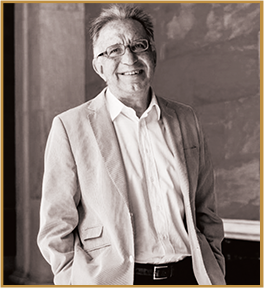
Credit: University of Cambridge
Athanassios Fokas (PhD ’79)
Mathematician
For his contributions spanning science, medicine, and the arts, including advances in partial differential equations, mathematical physics, the life sciences, and nuclear imaging for diagnosis and discovery, and for his work explaining and enlivening science and mathematics for the public. Hailing from the Greek island of Cephalonia in the stretch of the Ionian Sea that was home to Odysseus,
Athanassios “Thanasis” Fokas is a polymath whose career evokes the inquisitive nature of the ancient Greeks. As a mathematician, medical researcher, writer, and public speaker, Dr. Fokas has made significant contributions across multiple disciplines in a career defined by a relentless curiosity.
An emeritus professor at the University of Cambridge, where he was the inaugural Chair of Nonlinear Mathematical Science, Dr. Fokas is now director of the Mathematical Legacy Program in the Department of Applied Mathematics and Theoretical Physics at Cambridge. As an undergraduate, he studied aeronautics at Imperial College London before pursuing applied mathematics at Caltech. Dr. Fokas was then inspired to tackle mathematical biology, earning his MD at the University of Miami.
A leading figure in applied mathematics, Dr. Fokas has been at the forefront in the field of nonlinear partial differential equations, which can be used to describe phenomena such as those arising in fluid dynamics and optical communications. He is best known for inventing the eponymous Fokas method, a transformative algorithmic technique that has numerous applications in mathematical physics. The citation of his 2023 European Academy of Sciences Blaise Pascal Medal states: “The Fokas method … is considered the most important development in the solution of partial differential equations since the works of Fourier, Laplace and Cauchy.”
Thanks to his medical expertise, Dr. Fokas has also developed improvements in nuclear imaging that have expanded its diagnostic capacity, advanced the understanding of protein folding, and introduced models explaining the cellular dynamics of leukemia and the spread of COVID-19.
At Caltech, Dr. Fokas studied with Paco Lagerstrom, a professor of aeronautics and then of applied mathematics. Lagerstrom played a very important role in his cultural development and his passion for the opera. The pair often went to art museums together and listened to live Metropolitan Opera broadcasts on weekends at Lagerstrom’s Pasadena home. “I have the reputation of a polymath,” Dr. Fokas says. “I would love to have a conversation with him now to see how I measure up; at the time, he knew much more about ancient Greece than me.”
Though he only intended to earn a master’s degree at Caltech, Dr. Fokas found a natural home and opted to complete his doctorate. “I found out that the Department of Applied Mathematics at Caltech was born by professors leaving the Department of Aeronautics and forming their own department, and this is what attracted me to Caltech,” he says. “I would not have been who I am without this great institution. I am forever grateful.”
Dr. Fokas is a member of Greece’s Academy of Athens and all three major European academies. He is a Guggenheim Fellow as well as a fellow of the American Institute for Medical and Biological Engineering and the American Mathematical Society. He has received Greece’s Order of the Phoenix, the London Mathematical Society’s Naylor Prize, and the Kruskal Award/Lecture from the Society of Industrial and Applied Mathematics.
Dr. Fokas has co-authored more than a dozen scientific books, as well as books aimed at the general public. He has given hundreds of presentations to academic audiences and the wider public on topics as varied as Fourier transforms, mathematics and truth, the continuum of unconscious processes and consciousness experiences, and the impact of Hellenic thought.
“I am attracted by two basic features: beauty and significance,” Dr. Fokas says. “In order to study a problem, it must involve a beautiful mathematical formalism, and it must be mathematically, physically, biologically, or medically important; otherwise, I am not interested.”
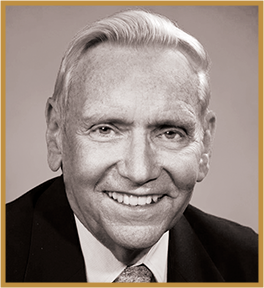
Credit: Broad Institute
F. William Studier (PhD '63)
Biophysicist
For the invention of technologies that have helped extend millions of lives through therapies, diagnostics, and vaccines; for his seminal work exploring the genetics and biochemistry of bacteriophage T7; and for his innovative techniques for high-throughput analysis of DNA, RNA, and proteins.
A quiet, reserved scientist who has always avoided the limelight, William Studier has a record of discoveries and innovations in the laboratory that were anything but modest. His work over a six-decade career laid the groundwork for therapies—including the COVID-19 vaccines—that have saved lives and enabled other breakthroughs in medicine and biology.
Now retired, Studier was a senior biophysicist and chair of the biology department at Brookhaven National Laboratory, where he worked for 54 years. Upon his arrival at Brookhaven in 1964, he continued his research into a specific type of bacteriophage known as T7, picking up work he had begun as a biophysics graduate student at Caltech. Bacteriophages, viruses that replicate in bacteria, are often used in DNA and RNA research.
Studier chose to study T7 because its short lifecycle allowed for speedy experimental results. He went on to invent systems, including a slab-gel apparatus, to analyze numerous bacteriophage T7 samples at once. Working with Brookhaven microbiologist John Dunn, Studier sequenced T7’s DNA. From that research, Studier developed a novel T7 expression system in the 1980s that made it possible to produce RNA quickly and efficiently. This work has since become the foundation of a vast swath of biomedical and vaccine research, and was used in the development of the COVID-19 mRNA vaccine.
The Nobel Assembly cited Studier’s research as instrumental in the scientific background for the 2023 Nobel Prize in Physiology or Medicine awarded to Katalin Karikó and Drew Weissman for their work in developing the COVID-19 vaccine. “Today, virtually every protein you want to produce in bacteria is made with a T7 system,” Venki Ramakrishnan, winner of the 2009 Nobel Prize in Chemistry, said in 2024 after Studier received the Richard N. Merkin Prize in Biomedical Technology for his lifetime of work on efficient and scalable technologies. “There’s not a single molecular biology or biochemistry lab I know that doesn’t use T7 systems.”
Studier’s work has always been driven by a desire to serve science. He gladly shared his findings with others engaged in the pursuit of knowledge. “You probably have rarely known anyone who had less self-promotion in mind,” says Susan Studier, his wife of 63 years, who spoke to the Caltech Heritage Project on behalf of her husband, who has aphasia. “He believes deeply in sharing knowledge.”
During his time as a graduate student, Studier worked with biology professors James Bonner, Robert Sinsheimer, and Max Delbrück, and chemistry professors Norman Davidson and Jerome Vinograd. “They were extraordinary role models,” says Susan Studier. “Bill has always been grateful for the years he spent at Caltech, not only for the outstanding faculty and focus on research but also for the students and postdocs he met and worked with. He made some lifelong friendships.”
Studier was elected to the National Academy of Sciences in 1992, one of his proudest achievements. Studier is also a member of the American Academy of Arts and Sciences, the National Academy of Inventors, and he was named a fellow of the American Association for the Advancement of Science. He holds 16 patents.
Throughout his career, Studier’s dedication to fundamental science never wavered. “I’ve always been interested in solving problems. There are many unknowns, but scientific investigation can provide definitive answers,” he told the Brookhaven Lab for a 2011 profile. “The motivation for my research is not commercial application. My interest is in basic research.”
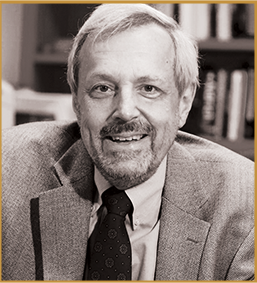
Credit: Courtesy of Donald Truhlar
Donald G. Truhlar (PhD '70)
Theoretical Chemist
For his discoveries in theoretical and computational chemistry, including the creation of models and measurements that have become cornerstones in the field, making him one of the most influential and cited researchers in the world.
When Donald Truhlar began his career in computational chemistry in the early 1970s, the field barely existed. “Before modern computation, people did pencil-and-paper theoretical chemistry,” Truhlar recounts. “You couldn’t really solve difficult problems without a lot of computation, so the availability of more powerful computational resources made a big change in theoretical chemistry.” When Truhlar began his graduate work at Caltech, such computation was done using punch cards. Now, computer simulations are used to solve problems, and Truhlar has become a luminary in the field he was instrumental in establishing.
Truhlar is now a Regents Professor and Distinguished University Teaching Professor in the Department of Chemistry at the University of Minnesota. He was named a Regents Professor in 2006, a designation that is the University of Minnesota’s highest recognition of excellence in scholarship and teaching.
As a doctoral candidate at Caltech, Truhlar worked with the late Aron Kuppermann, then a professor of chemical physics, developing methods that have become standard tools in research—such as using quantum mechanical scattering theory for analyzing collisions of electrons, atoms, and molecules. This involves solving the Schrödinger equation with scattering boundary conditions. “Aron always was willing to try the most difficult problems,” Truhlar says. “The key was developing methods that would be practical on the computer and would solve problems that were more difficult than problems that had previously been solved.”
The scope of Truhlar’s work over more than five decades has been vast and includes the development of an accurate quantum mechanical scattering theory for chemical reactions; the study of quantum effects like tunneling, coherence, and decoherence in semiclassical dynamics; advances in quantum mechanical photochemistry; and more. His work has had almost unparalleled influence in theoretical chemistry; his papers have been cited more than 250,000 times to date.
Truhlar grew up in the Chicago suburbs and received his bachelor’s degree from St. Mary’s College (now Saint Mary’s University of Minnesota) in 1965. His older brother was a physicist, and Truhlar began his undergraduate studies thinking he might pursue that field until a professor at St. Mary’s gave him the chance to do organic chemistry research. He was drawn to Caltech for his graduate work due to its reputation for serious scholarship. “They had good laboratories and hired the best faculty members to advise the students,” he says. “The school had a real sense of excellence.”
Truhlar is a fellow of the American Association for the Advancement of Science, the Royal Society of Chemistry, the American Chemical Society, and the American Physical Society, and he is a member of the National Academy of Sciences (NAS). He has also received international awards from each organization.
Truhlar is an honorary fellow of the Chemical Research Society of India and the Chinese Chemical Society. Some of his other top honors include a National Science Foundation Special Creativity Award, and the Schrödinger Medal of the World Association of Theoretical and Computational Chemists. In 2015, the American Chemical Society’s Physical Chemistry Division convened a symposium in honor of Truhlar’s contributions to computational chemical dynamics.
Today, Truhlar still develops practical methods to solve the most difficult quantum chemistry problems, such as those involved in density functional theory—an alternative to the Schrödinger equation for describing the electronic states of molecules and materials. “I want to do complicated problems in a more automatic way so that a wider community can use the tools I’m developing,” he says.