
The Element That Knew Too Much: How Lead Connects Two Generations of Caltech Scientists
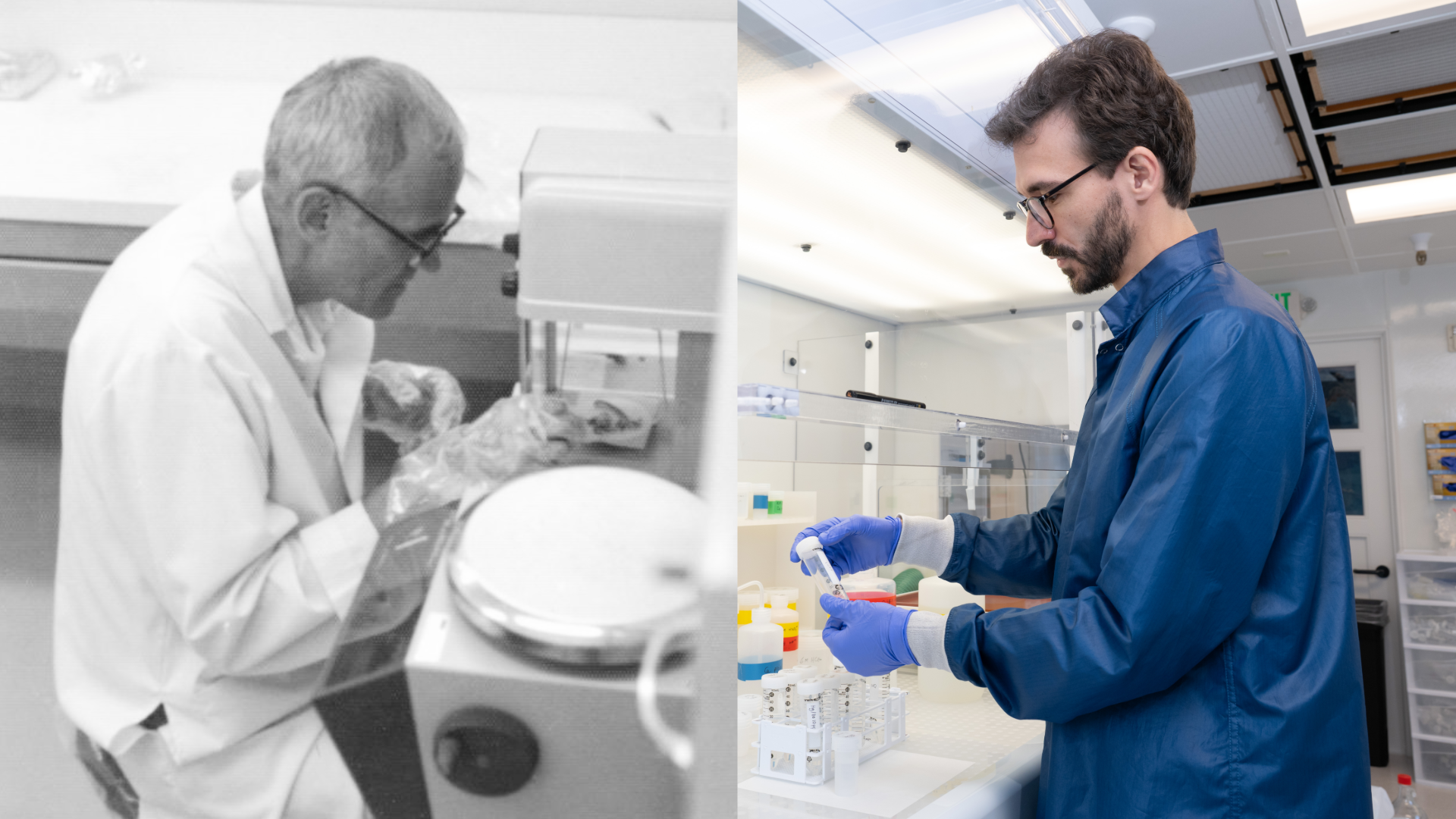
Left: Clair C. Patterson, whose quest to determine the age of the Earth exposed the global reach of industrial lead contamination. Image: Caltech Archives. Right: François Tissot, whose research traces lead released by the Eaton Fire to better understand its impacts on communities. Image: Lance Hayashida for Caltech.
What do the age of the earth and the LA wildfires have in common?
by Sabrina Pirzada
In 2025, as the Eaton Fire swept through his Altadena neighborhood, Caltech geochemist François Tissot redirected the tools of planetary science toward a more earthbound problem: How much toxic lead was released into our environment as homes that were built before lead bans burned? In doing so, he echoed the work of a different era of Caltech science.
In the 1950s, Caltech geochemist Clair C. Patterson set out to determine the age of the Earth using isotopic variations of lead as his main tool. Answering questions about the distant past requires evidence that records the passage of time. In geochemistry, that evidence comes in the form of changes in isotope ratios—the relative abundances of subtle variants of a chemical element—which can be measured with extraordinary precision to reveal a sample's age and origin.
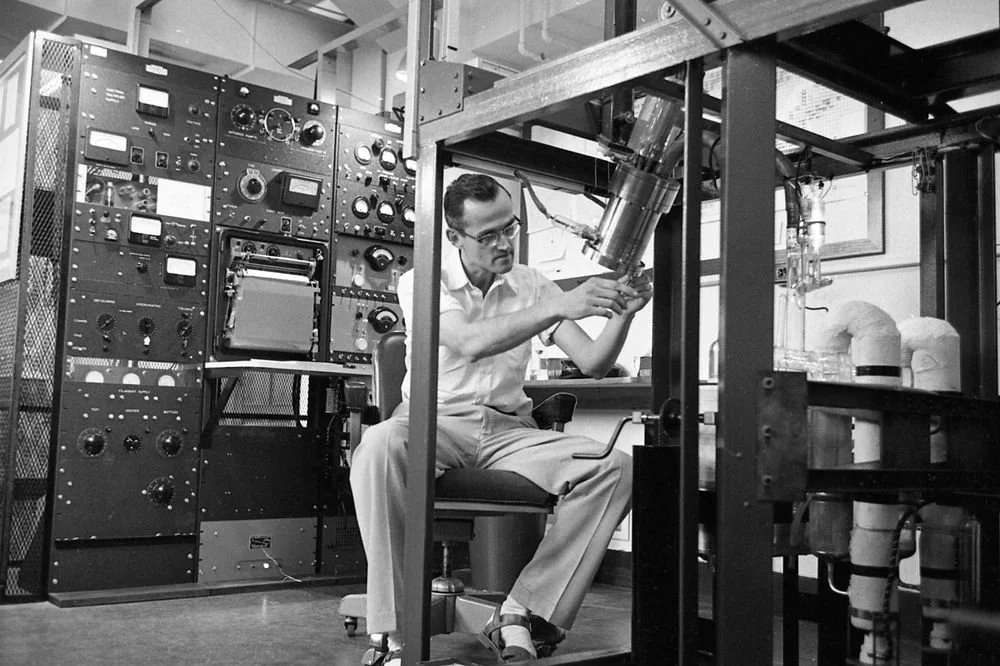
Clair C. Patterson in his Caltech laboratory in 1957, during the period when his work on lead isotopes helped establish the age of the Earth. Image: Caltech Archives.
Patterson’s lead isotope work ultimately succeeded in revealing our planet’s age at about 4.5 billion years. It also surfaced a problem that would reverberate into Tissot’s lifetime decades later: the presence of dangerous levels of lead in the modern world via leaded gasoline, industrial contamination, and even materials used in homes.
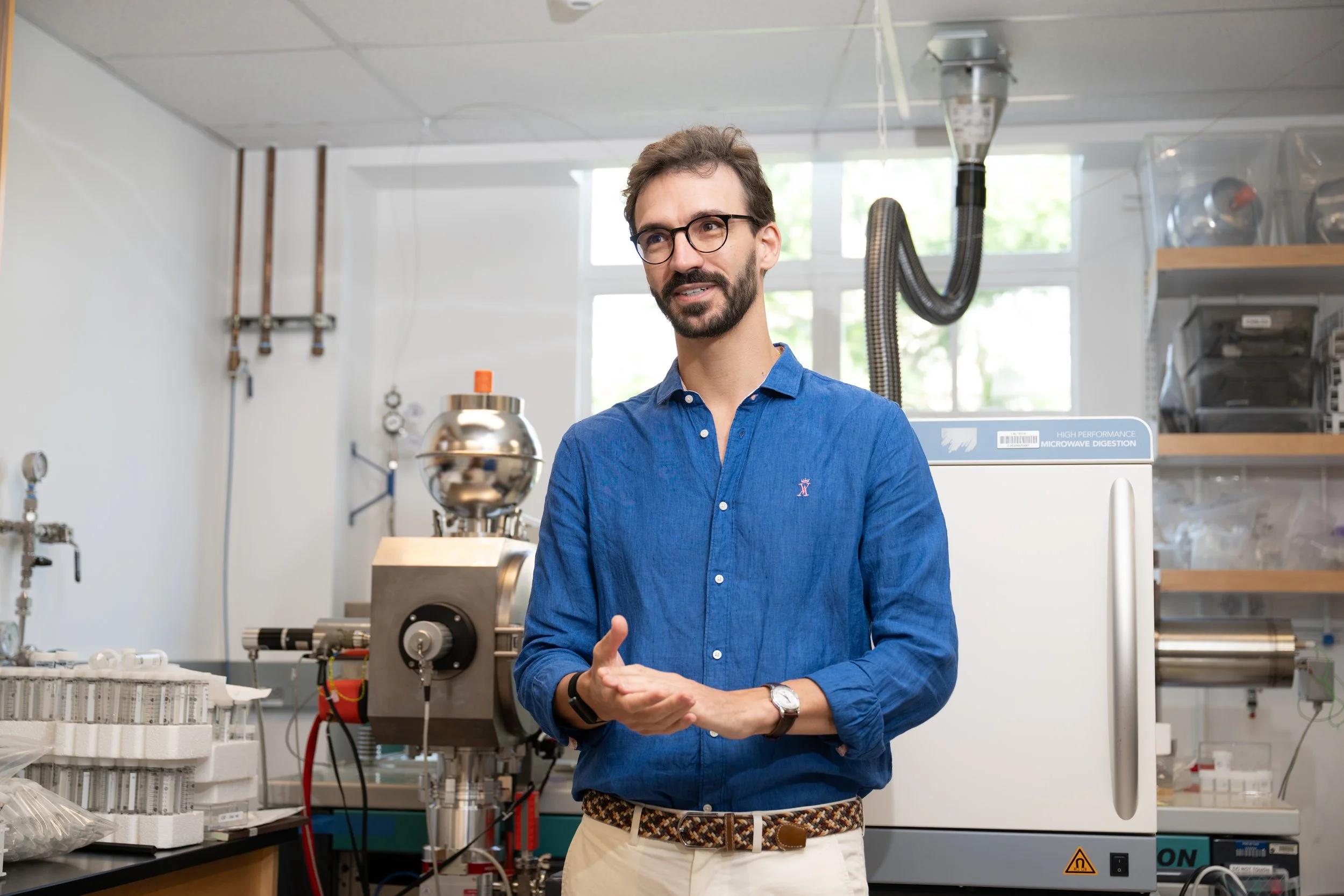
François Tissot in his Caltech laboratory, where he applies isotope geochemistry to questions ranging from the origins of the solar system to lead contamination after the Eaton Fire. Image: Lance Hayashida for Caltech.
Seven decades later, the question of lead contamination reemerged in Tissot’s work in the aftermath of wildland–urban interface (WUI) fires in California. For Tissot, this research sits at the intersection of the professional and the deeply personal. His own home was rendered uninhabitable by the fire he and his research group would spend years studying. In a Watson Lecture delivered January 2026, he told two stories—Patterson's and his own—showing how the problem of lead toxicity and questions around who is responsible for managing it continue even decades after the widespread use of it was banned.
In early January 2025, Tissot and his young family had just returned home to California after the holidays. He had recently earned tenure. Encouraged by his division chair, he started thinking about the big questions he wanted to pursue over the next decade. Days later, the flames erupted.
Even while evacuating, Tissot remembers, he was thinking about what he needed to do to help. Soon afterward, he asked his lab members whether they'd be willing to redirect their work toward understanding contamination caused by the fire. Graduate students and postdocs who had been tracing the origins of Earth's water and the history of the solar system were soon collecting dust from homes in and around the burn zone, measuring toxins after the fire.
Most of the homes in the path of the Eaton Fire were built before 1950, during the era of lead paint, lead pipes, and lead solder. When they burned, decades of accumulated lead escaped in the form of ash, smoke, and fine particles. Tissot began measuring lead in contaminated homes as well as his own home.
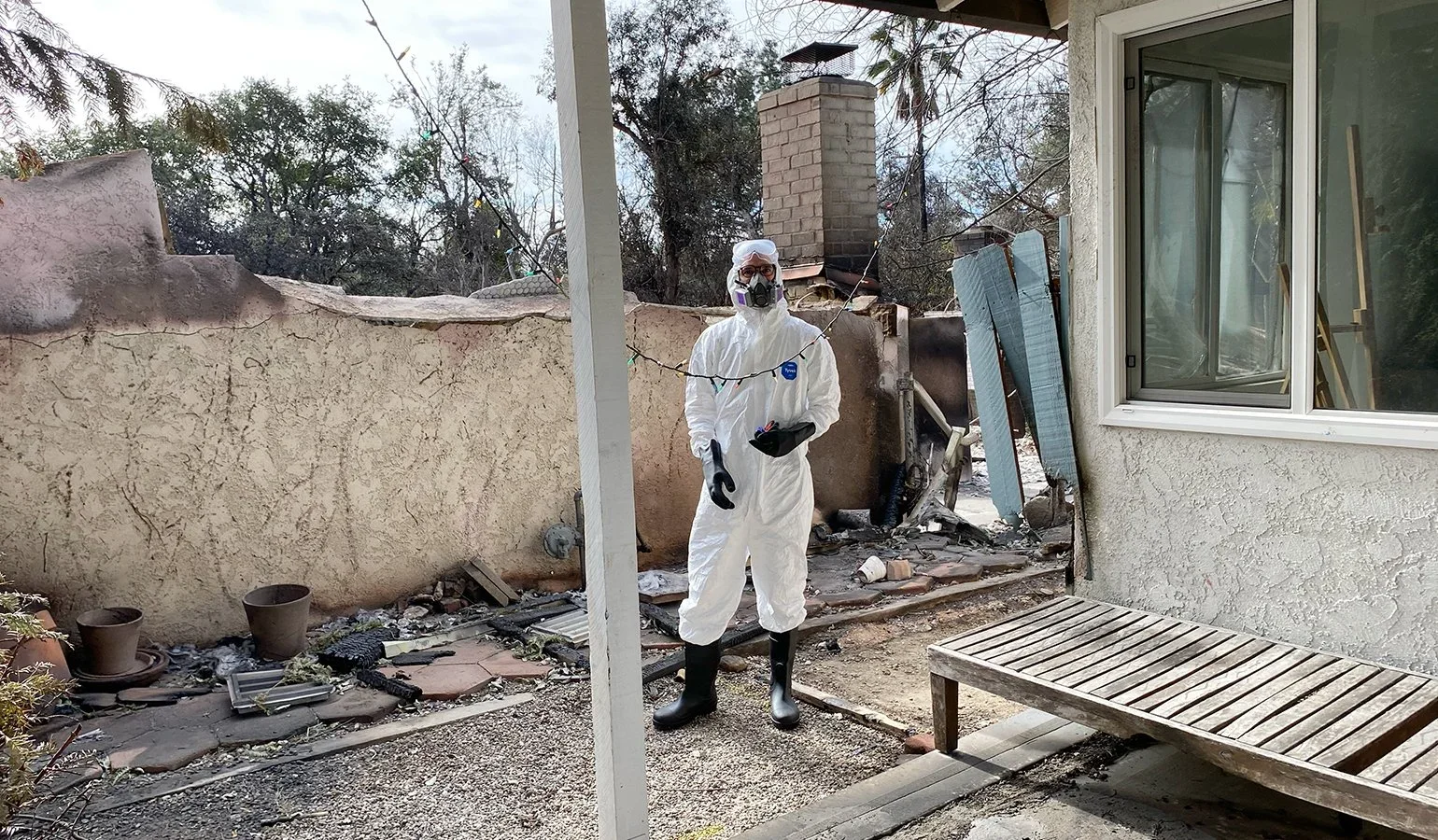
François Tissot surveys his fire-damaged home in safety gear. His research shows that lead and other toxic metals traveled via smoke into homes outside of the burn zone. Image: Courtesy of François Tissot
Tissot’s swift professional detour mirrored that of his Caltech predecessor. Back in the mid-1950s, Patterson believed he had a straightforward assignment in trying to determine the age of our planet. Because uranium decays into lead at a known rate, measuring the ratio of uranium to lead inside a rock could reveal its age. His advisor told him the question would be “duck soup”—a simple calculation that would make a young scientist famous. Instead, Patterson encountered a problem that made no sense. Samples of known age kept coming back impossibly old. There was more lead present than radioactive decay could ever account for. The obvious answer was contamination. As Patterson investigated, he found lead everywhere—in glassware, in tap water, in paint, in dust, on his clothes, in his hair, and on his skin. Industrial lead had become so pervasive that it had faded into the background of modern life, and, thus, the question of Earth’s age unexpectedly revealed a public health crisis.
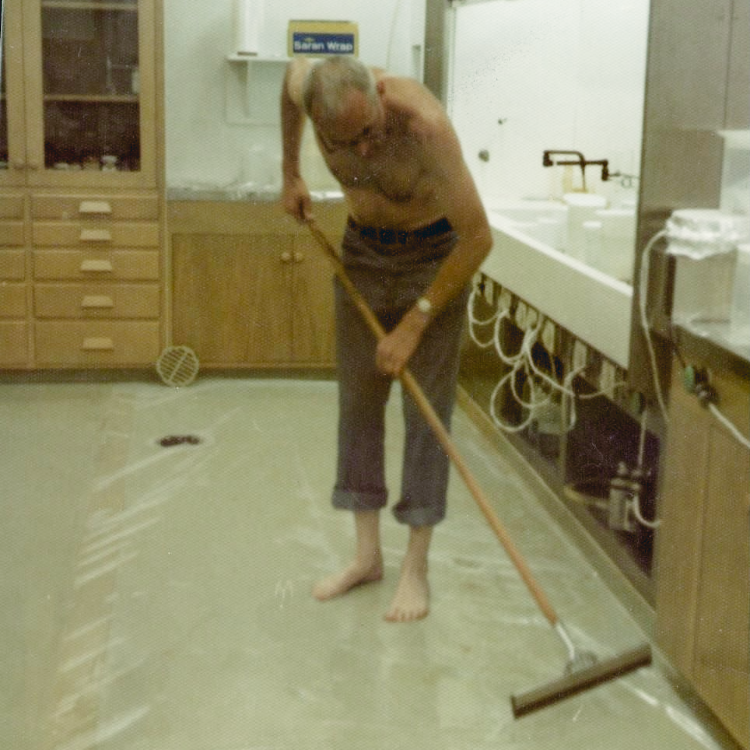
To eliminate even trace amounts of lead contamination that could compromise his measurements, Clair C. Patterson meticulously cleaned every surface in his laboratory, including the floors, helping pioneer one of the world's first ultra-clean laboratories. Image: Caltech Archives
The dangers of lead had been known long before Patterson. The first-century B.C. Roman architect Vitruvius warned against lead pipes. Benjamin Franklin observed that printers who worked with lead type could suffer paralysis. Yet, lead continued to find widespread use. In 1923, workers at a New Jersey factory producing tetraethyl lead—a gasoline additive used to prevent engine knock—began dying. Pathologist Robert Kehoe, who would become the gas industry’s go-to scientist, came in to investigate. Kehoe advanced two claims: that everyone has lead in their blood and that there was a safe level of exposure below 80 micrograms per deciliter, where lead has no effect on the body whatsoever. “That sounds scientific, but it isn't,” Tissot said in his Watson Lecture. “The more of something toxic the body absorbs, the stronger the effect. There is no threshold at which lead stops being lead.”
Patterson’s work made the lead contamination problem undeniable, but the political battle was just beginning. In 1964, he wrote to his division chair that he had become involved with the health implications of leaded gasoline. It took the rest of his career—33 years of accumulating evidence, legal battles, senate hearings, industry lawsuits, and battles in the media—until the last drop of leaded gasoline was pumped in the United States.
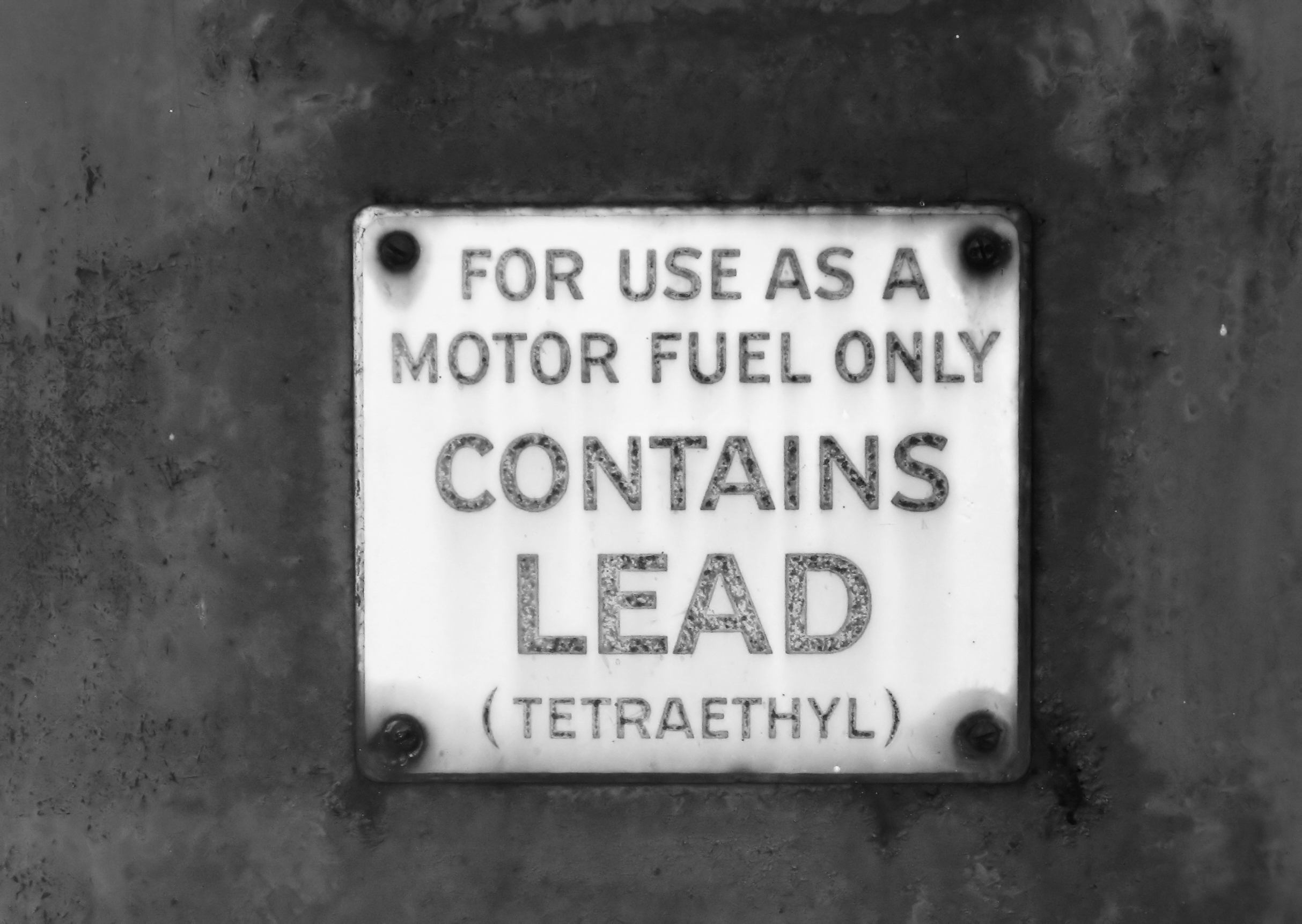
Patterson's research demonstrated that most of the lead in the environment came from industry, not nature, which eventually led to the Clean Air Act of 1970. In the U.S., lead was largely eliminated from gasoline by 1986, and the sale of leaded gasoline for on-road vehicles was fully banned on January 1, 1996.
Tissot’s 2025 fire contamination data was disseminated within weeks, yet the long-term response remains uncertain. One-third of American homes sit at the wildland–urban interface, making them especially vulnerable to wildfires. The frequency of megafires, or extreme wildfires, is rising. The scientific tools to inform public policy exist, but how government agencies will respond remains unclear.
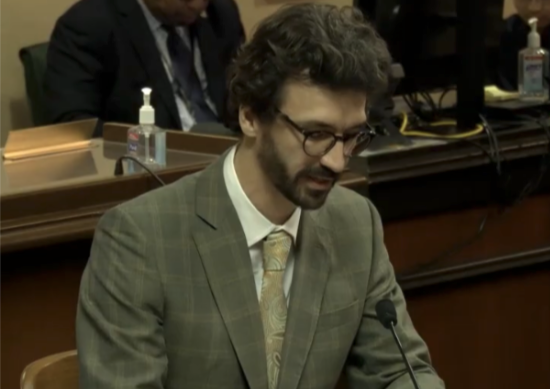
As an Eaton Fire survivor and a subject matter expert, François Tissot testified before the California State Assembly in support of AB 1642, legislation to establish evidence-based standards for testing and clearing toxic contaminants after wildland-urban interface and urban fires. Credit: California State Assembly (video still).
As an Eaton Fire survivor and a subject-matter expert, Tissot testified before California legislators in support of AB 1642, legislation establishing science-based statewide standards for testing, remediating, and clearing lead and asbestos contamination after wildfires, along with guidance addressing other contaminants and the safe reopening of schools. Despite opposition from insurance trade groups during the legislative process, the bill passed both houses of the Legislature and was signed into law on September 15, 2026.
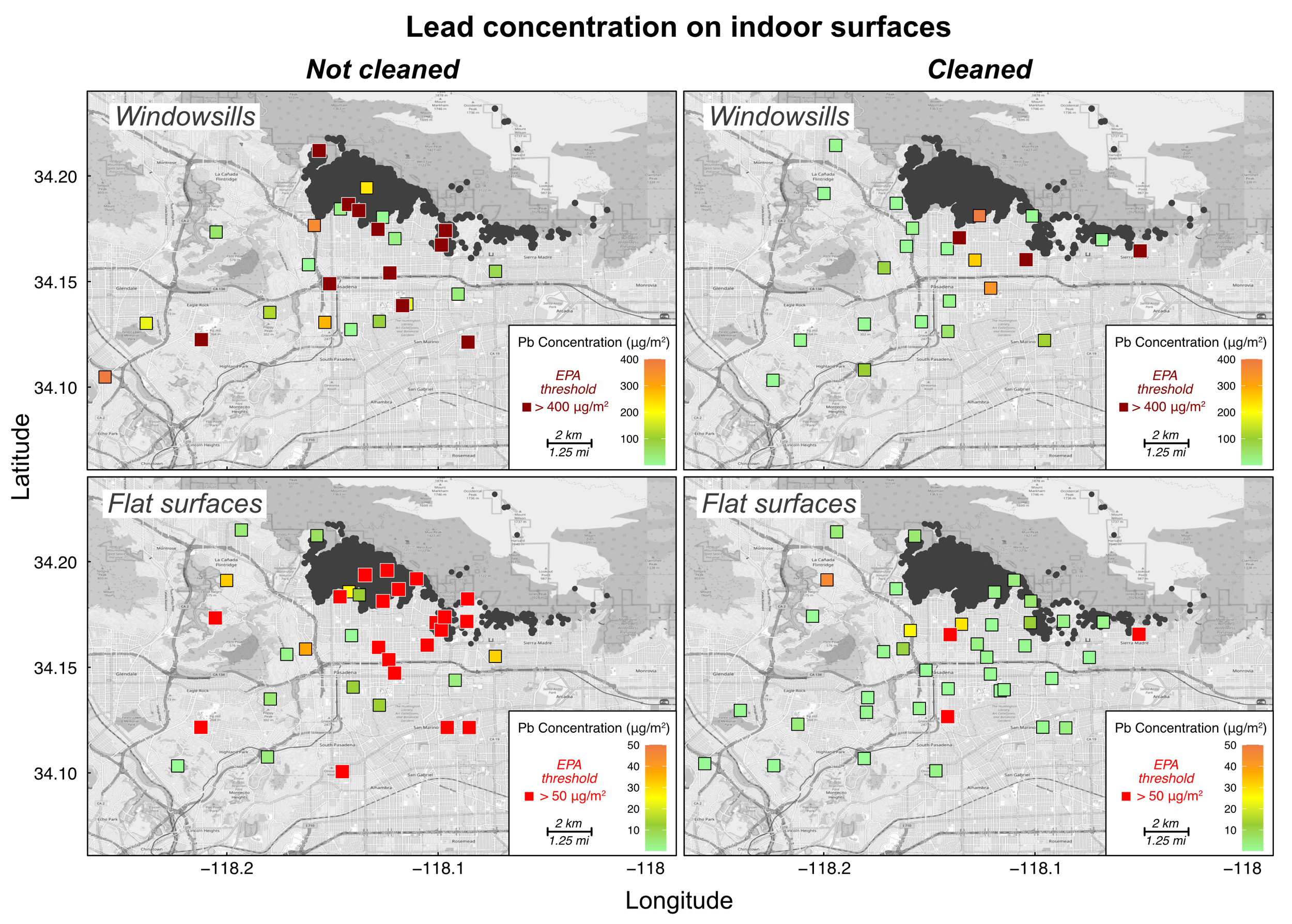
Map of the indoor concentration of lead as a function of distance from a window. Image: Courtesy of François Tissot
A significant research question after the Eaton Fire is where the lead went and what it is doing now to families living both inside and outside of the burn zone that might not know they’ve been exposed. One year later, only 218 children in the affected region have been tested, public health records indicate. Six out of 10 professionally remediated homes remain uninhabitable. Families have been told to return anyway. When asked why he pivoted toward fire research, Tissot's answer was simple: No systematic data existed on urban fires and the contamination they cause. “It’s a new type of fire. This is what the insurance industry has to recognize. If [the research] doesn't exist, and we can do it, then we should, so that the next time it happens, we're ready, and we can remove excessive suffering from the world.”
This article was adapted from François Tissot’s January 2026 Watson Lecture. Watch the full lecture below, or on YouTube.