
“As I'm telling the story [of LIGO], because I've been in it so long, I remember the names and the faces of all the people who had to do all that engineering work for decades and decades to get us to that point. But if you look at any of the pieces of this instrument, there's all of these people behind it, working on it. Every one of these elements has a story behind it of how all the pieces came together.
“There's a long history of people struggling to get it to work, and it doesn’t work. It's a tough slog, I have to say. You're in the lab day after day, and you are working on your little thing. And what's the encouragement? How do you actually keep going when nothing is working out for you for so long? For me, I've been involved since before the first detection for about 15 to 20 years. Already when I got to Caltech, there had been people doing it for decades, and I just couldn't understand how they kept going after all that, well, not a lack of a success but a tough slog with no big rewards. But you can see the progress over time. … Just recently in our last observing run, [we saw] a huge rate increase. What's going on there? It's not like the universe is all of a sudden merging more black holes because it likes us. The universe doesn't seem to care about us that much. This is all the people behind the scenes who are making this happen."
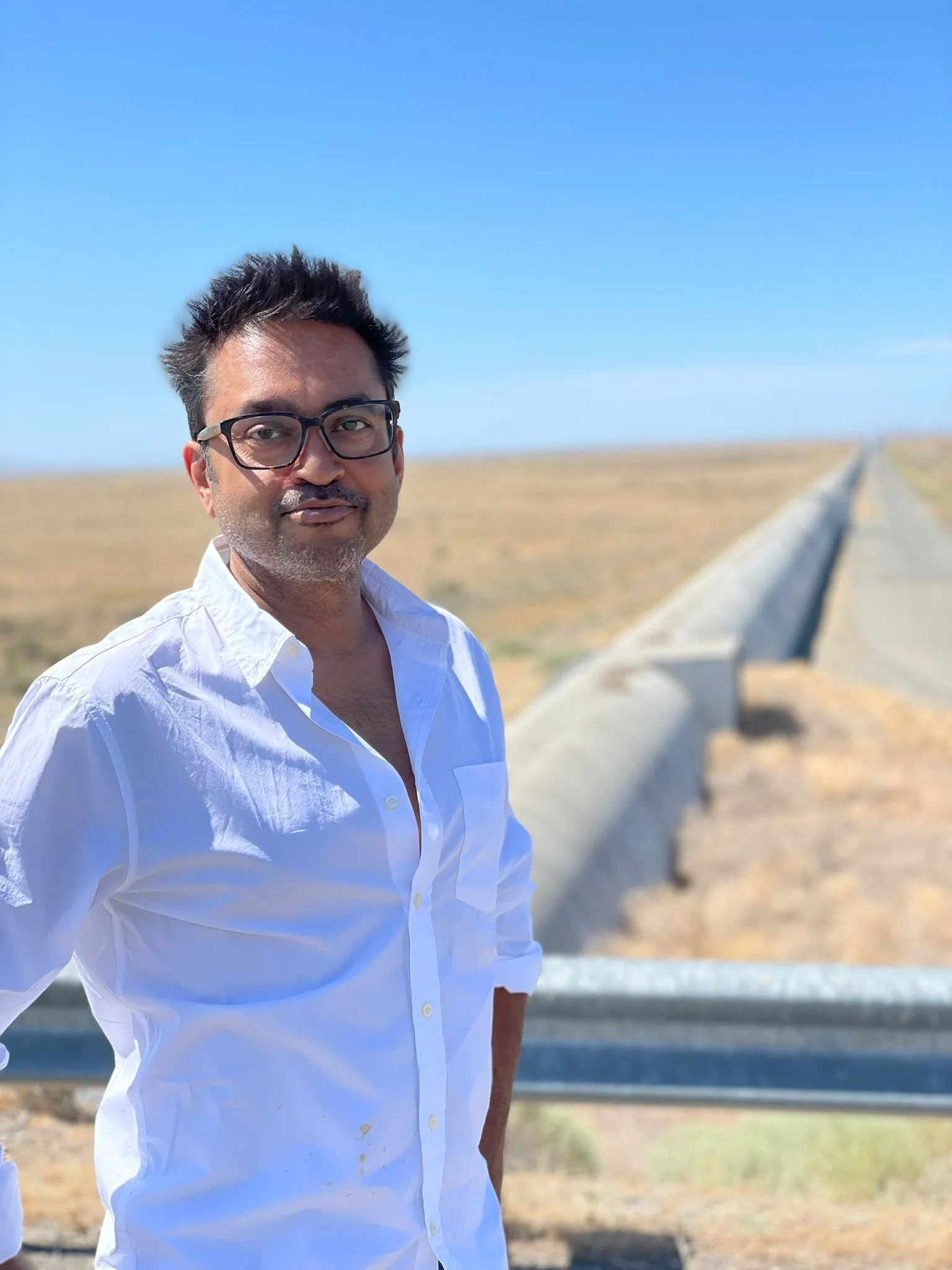
Rana Adhikari is a professor of physics at Caltech and a longtime member of the LIGO team. He recently spoke at a Caltech celebration for the 10th anniversary of LIGO's historic first-ever detection of ripples in space-time called gravitational waves.
#SoCaltech is an occasional series celebrating the diverse individuals who give Caltech its spirit of excellence, ambition, and ingenuity. Know someone we should profile? Send nominations to magazine@caltech.edu.