
Meet Ray Jayawardhana: Catching Up With Caltech’s Tenth President
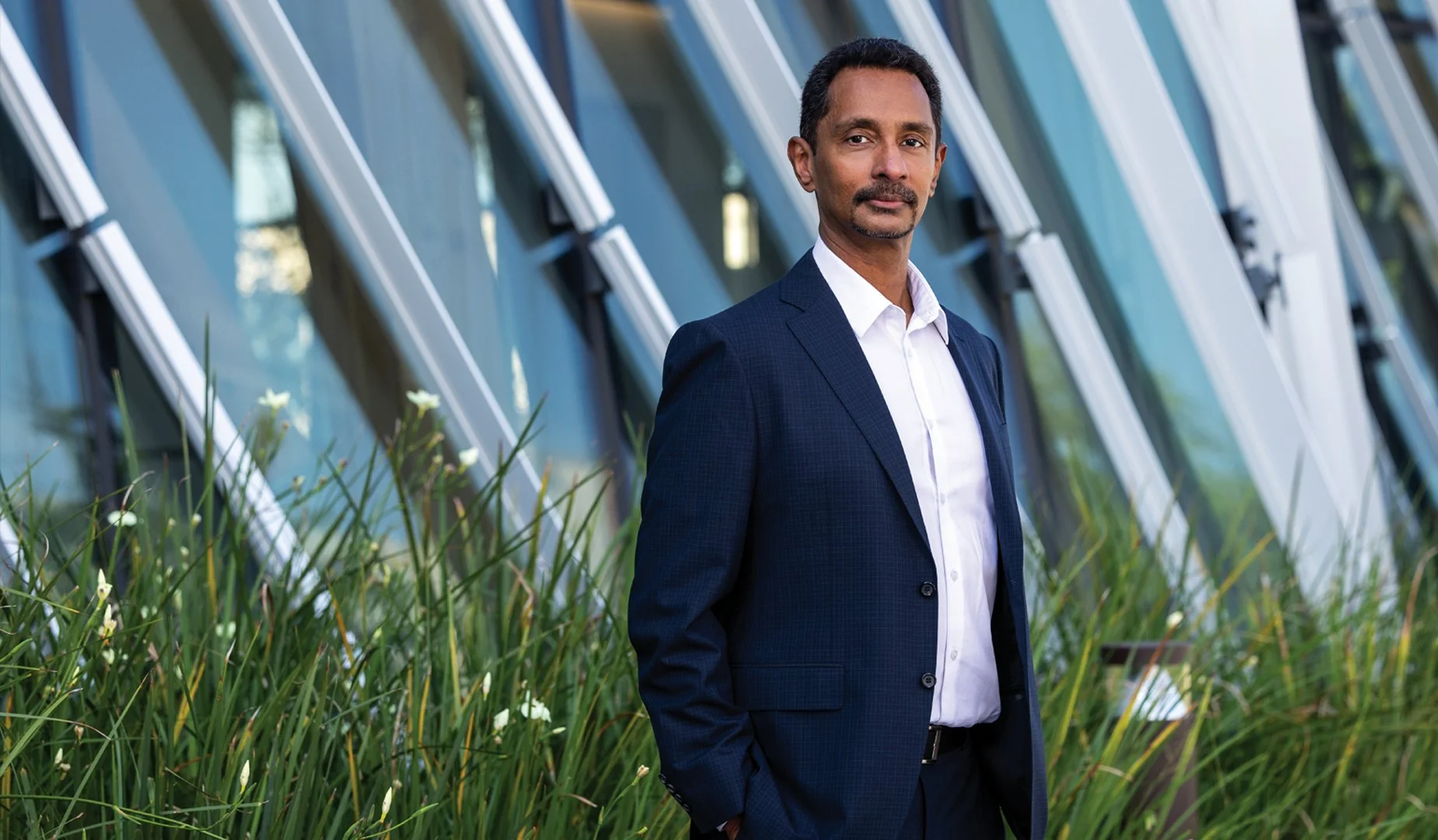
Incoming Caltech President, Ray Jayawardhana. Credit: Max S. Gerber.
Ray Jayawardhana has spent his career exploring other worlds. Now, he has begun a new adventure in Pasadena.
Ray Jayawardhana, a renowned astrophysicist, award-winning communicator, and transformative academic leader who has held senior roles at two of the country’s preeminent research universities, joined Caltech as the Institute’s 10th president on July 1, 2026.
Jayawardhana’s ties to Caltech and JPL trace back decades. As a teenager in Sri Lanka, he wrote to JPL asking for photographs from the Voyager missions to the outer planets. He recounted that formative memory at community gatherings in January, where he was welcomed by Board of Trustees Chair David W. Thompson (MS ’78), presidential search committee chair and Merle Kingsley Professor of Physics Jonas Zmuidzinas (BS ’81), and student leaders.
“Ray is a visionary leader who embodies the qualities and attributes that distinguish Caltech’s community,” Thompson said. “He has deep and broad curiosity for exploring our world and the universe around us. He possesses a daring yet thoughtful disposition for tackling complex problems in new and innovative ways. And he has an unwavering commitment to cultivating the research and educational environment in which shared ambition and collaboration thrive.”
Thompson added: “He believes deeply that the knowledge we create should be shared widely, ensuring that discovery ignites public imagination and serves as a catalyst for broader progress. He will be a forceful ambassador for Caltech and for the critical and essential role that this community plays in advancing fundamental science, in training the next generation of leaders, and in further extending and accelerating humanity’s reach across the solar system and beyond.”
Zmuidzinas noted that while scientific distinction is a prerequisite for any Caltech president, Jayawardhana represents considerably more. “Ray brings to Caltech a stellar record of academic leadership, defined by close, collaborative partnership with faculty and other institutional leaders; productive engagement with external partners; and a proven ability to harness collective ambition to deliver results with lasting impact. … All members of the Search and Selection committees are united in our enthusiasm that Ray has agreed to come to Caltech to serve as our next President,” he said.
Prior to joining Caltech, Jayawardhana served as a professor of physics and astronomy and as provost of Johns Hopkins University, overseeing its 10 schools and an expansive portfolio of interdisciplinary programs, centers, and core administrative and operational units. He was previously the Harold Tanner Dean of the College of Arts and Sciences and Hans A. Bethe Professor at Cornell University. Earlier, he spent a decade on the faculty at the University of Toronto, where he held a Canada Research Chair and served as senior advisor on science engagement to the university’s president. He received a bachelor’s degree in astronomy and physics from Yale University and a PhD in astronomy from Harvard University. At the gathering in January, Jayawardhana told the Caltech community he aimed to “steward curiosity at scale and harness the power of bold ideas and support the people who pursue them.”
Caltech magazine spoke with Jayawardhana to learn more about his personal and professional journey.
Dr. Jayawardhana, welcome to Caltech. What made Caltech and this opportunity appealing to you?
The word “unique” gets overused, but Caltech truly is a singular place with a close-knit community whose commitment to excellence is relentless. That ethos runs deep and wide, and it imbues everything we do. It’s simply how people here approach their work, from the rigor of the core curriculum to the discernment exercised in faculty recruitment, from the daring spirit fueling interplanetary exploration to the creativity sparking technological breakthroughs.
What I also find remarkable—and this is something that becomes clearer the closer you look—is the sheer scale of impact that a relatively small, highly engaged community has had on science and on humanity. There are institutions many times Caltech’s size that haven’t come close to matching its contributions. That’s not an accident. It results from the intensity of focus, the caliber of the people, and the culture that takes seriously the idea that the questions you choose to pursue matter as much as how vigorously you pursue them.
I’m also clear-eyed about the moment we’re in. The funding and policy landscape for science is shifting, and Caltech and JPL have felt those pressures too. I intend to be a fierce advocate for the Institute’s mission, for the people who advance it, and for the case that fundamental discovery and applied innovation are not in tension, that they reinforce each other. Making that case with passion and conviction is a challenge I welcome.
The opportunity to be part of this community, and to steward and champion it, is the honor of a lifetime.
What first drew you to astronomy?
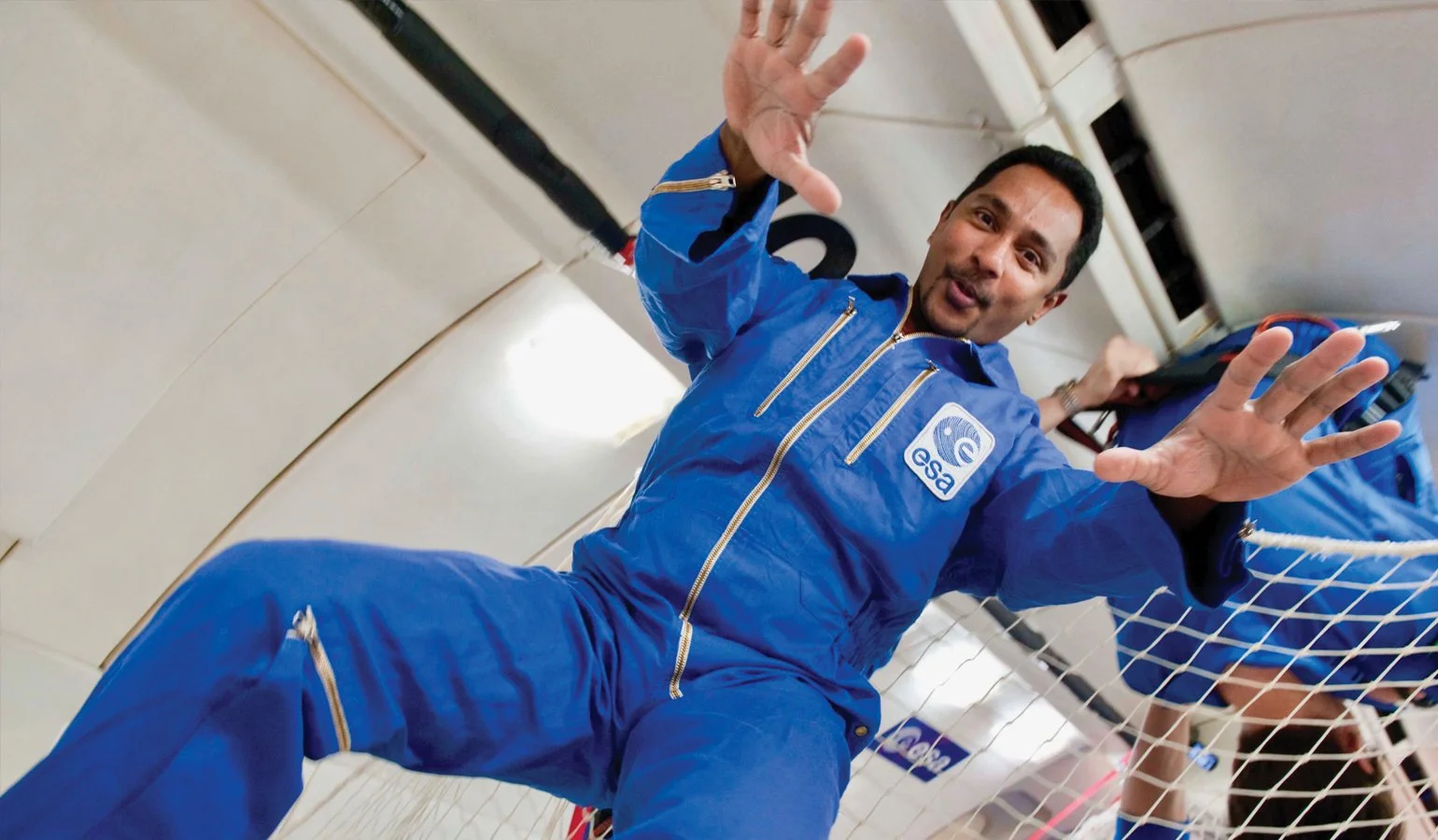
Courtesy of Ray Jayawardhana.
My interest goes back to about age 4 when we lived in southern Sri Lanka. I was in our garden with my father when he pointed to the moon and said, “People have walked on that.” As a kid, it blew my mind. I didn’t quite know what to make of it, but the thought that occurred to me was that if humans could do that, what couldn’t we do?
It wasn’t the science that captivated me initially; it was the sense of adventure, the sheer audacity of traveling to the Moon. That was the first spark. Over the years, it developed into a passion for astronomy rooted in wonder, curiosity, and a drive to explore. Beyond pursuing my research, I’ve been privileged to take part in adventures that I could only dream of as a child, such as searching for meteorites in Antarctica, watching a total solar eclipse on the Mongolian steppe, and experiencing the thrill of weightlessness on a parabolic flight.
At your introduction in January, you spoke about your childhood connection with JPL. Could you tell us more about that?
Alongside reading books and popular science magazines and being active in amateur astronomy groups, I was an avid listener of BBC Radio and Voice of America. Through everything I consumed, JPL kept emerging as a center of action, particularly in the exploration of our solar system through missions like Viking and Voyager.
So, I remember typing up a letter and sending it to 4800 Oak Grove Drive, asking for information and images from those missions. Weeks later, I came home from school to an envelope with the JPL logo waiting for me. Inside was a viewbook filled with photographs of Jupiter and Saturn, their moons and ring systems, as captured by Voyager a few years earlier. It was spectacular.
I finally had the chance to visit Caltech for the first Sagan Summer Workshop—then called the Michelson Summer School—as a graduate student. And now, years later, I find myself here not as a visitor but as an incoming member of this community. It still feels a bit surreal!
What excites you the most about the research you are doing now?
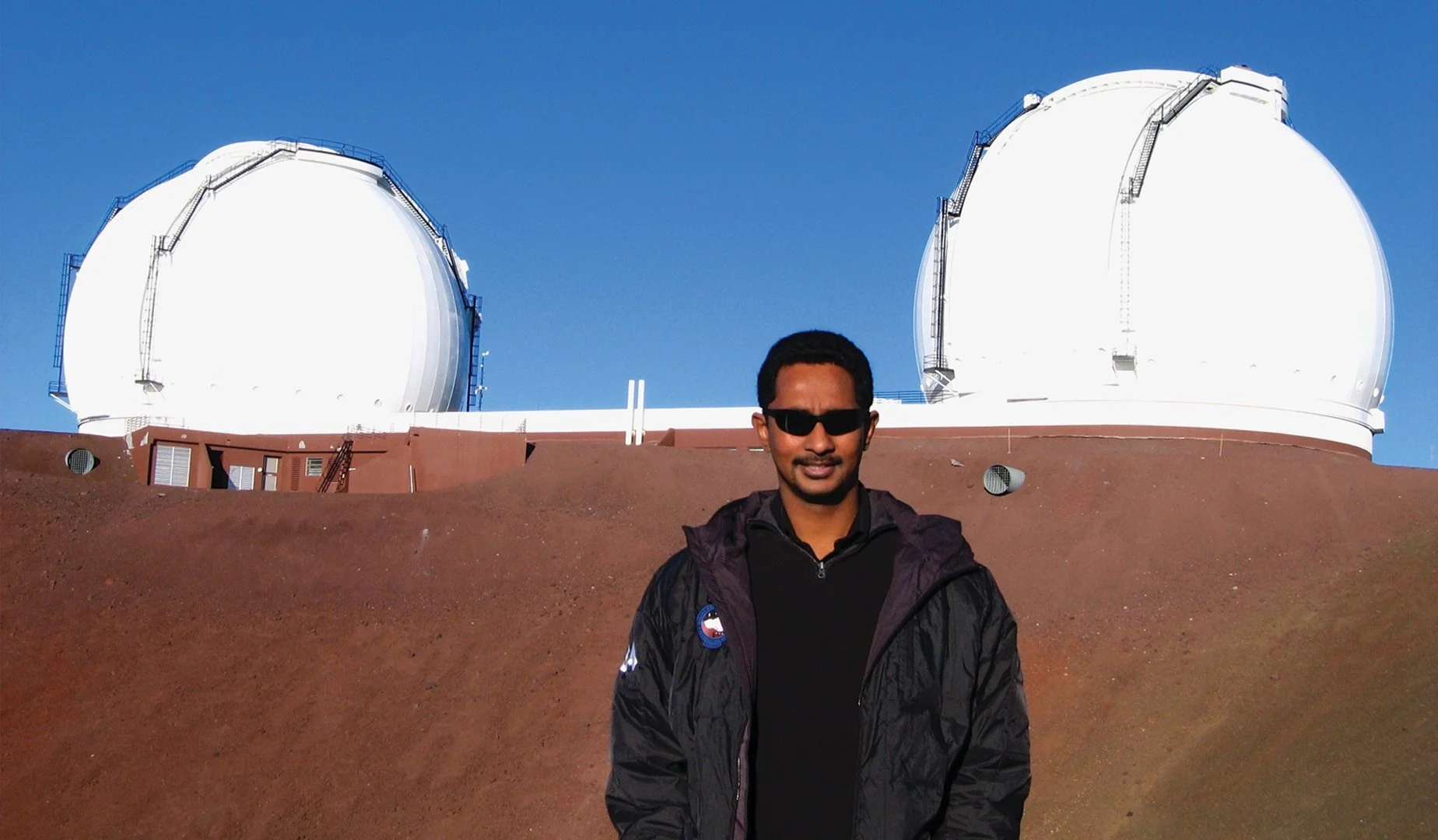
Courtesy of Ray Jayawardhana
We’re living through an incredible revolution in our understanding of the universe and our place within it, a moment comparable to Galileo’s in some ways. When I started graduate school, we knew of one planetary system: our solar system. Since 1995, astronomers have identified more than 6,000 planets orbiting other stars. We’ve moved from speculating about other worlds to actually finding them, tracking them, and now, most excitingly, getting to know them as physical objects.
My research group explores exoplanets, brown dwarfs, and star formation using the largest telescopes in space and on the ground, including the Keck Observatory. One of my postdocs recently led a paper about an ultra-hot gas giant exoplanet for which we’ve begun characterizing the atmosphere through remote sensing with spectroscopy. We can tell you the temperature difference between the night and day sides, that winds reach 10,000 miles per hour, and how clouds fill the sky at dawn but dissipate by the evening. Even though I do this kind of work for a living, I still find it mind-blowing that we can make such measurements for a world hundreds of light-years away!
Staying active in research during my years as a dean and provost has been important to me. It keeps me intellectually engaged and personally inspired. I also retain some sense of the highs and lows of being a faculty member, from the excitement of a long-awaited result to the frustration of a rejected proposal to the joy of mentorship. That lived experience shapes how I think about supporting faculty and what an institution owes its researchers.
I’m looking forward to continuing our group’s work here as a professor of astronomy. The presidency is a privilege and so is the opportunity to remain a working scientist.
As a widely recognized writer and science communicator, you have also authored popular science books and a children’s book; you have contributed to outlets like The Economist, The New York Times, and The Wall Street Journal, and you have been the inspiration behind a television documentary. How did that interest take shape, and what public engagement efforts have you been especially proud to be part of?
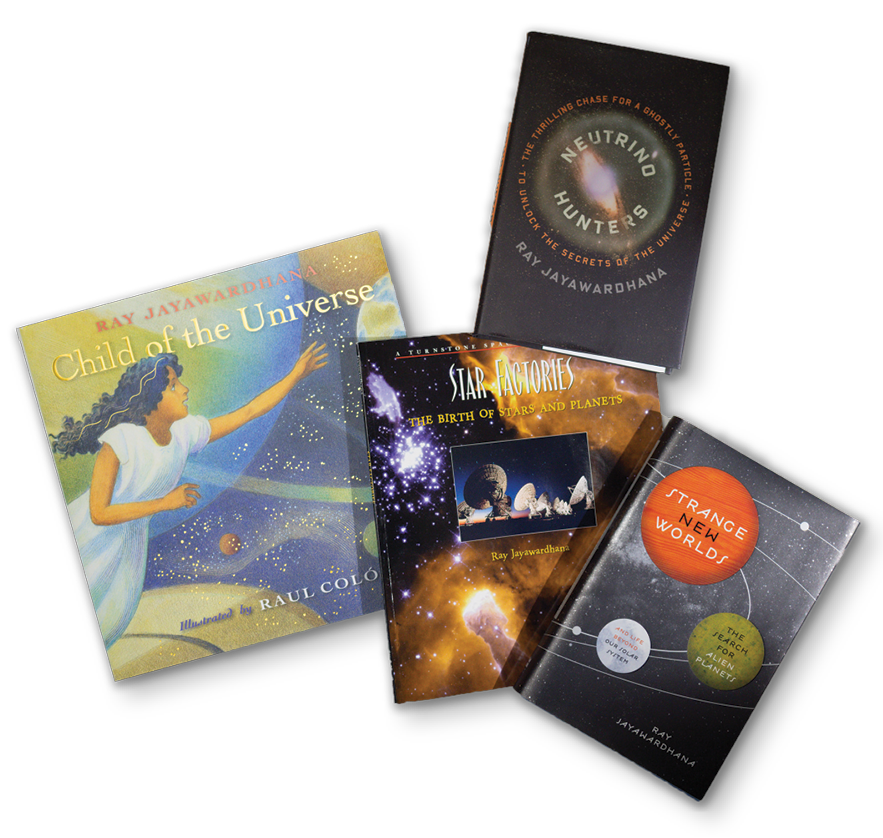
Courtesy of Hartlove-Goodyear.
I inherited a love of writing and language from my late father. My first published piece appeared on the children’s submissions page of a local paper when I was in sixth grade, and I still remember the thrill of seeing my name in print for the first time. At Yale, I wrote for the student newspaper and a campus science magazine.
The summer after my first year, I had an internship at The Economist in London. That experience showed me that the best writing demands the same intellectual vigor and clarity of thought as the science itself.
But public engagement takes many forms beyond books and bylines, and I’ve always been drawn to approaches that meet people where they are. One initiative I’m particularly proud of is the “Cool Cosmos” campaign that was carried out while I was on the faculty at the University of Toronto. We deployed 3,000 ads with catchy phrases and designs inside Toronto’s subway cars, streetcars, and buses. The goal was to pique people’s curiosity about the universe and remind them of our intimate connections with the cosmos.
Beyond your own work, you have also built structures within universities that support public engagement. How have you approached that?
Public engagement flourishes when institutions offer opportunities and encouragement.
At Cornell, we launched a Distinguished Visiting Journalist program that embedded working journalists on campus for extended periods, deepening the relationship between the media and the academy in ways that a single lecture or panel never could.
And at Hopkins, we created the Provost’s Fellows for Public Engagement, selecting a cohort of outstanding faculty for tailored communications training and engagement opportunities. The demand from faculty was high from the start and the outcomes were tangible. It was gratifying to receive enthusiastic feedback from the participants, many of whom found the experience a highlight of their career.
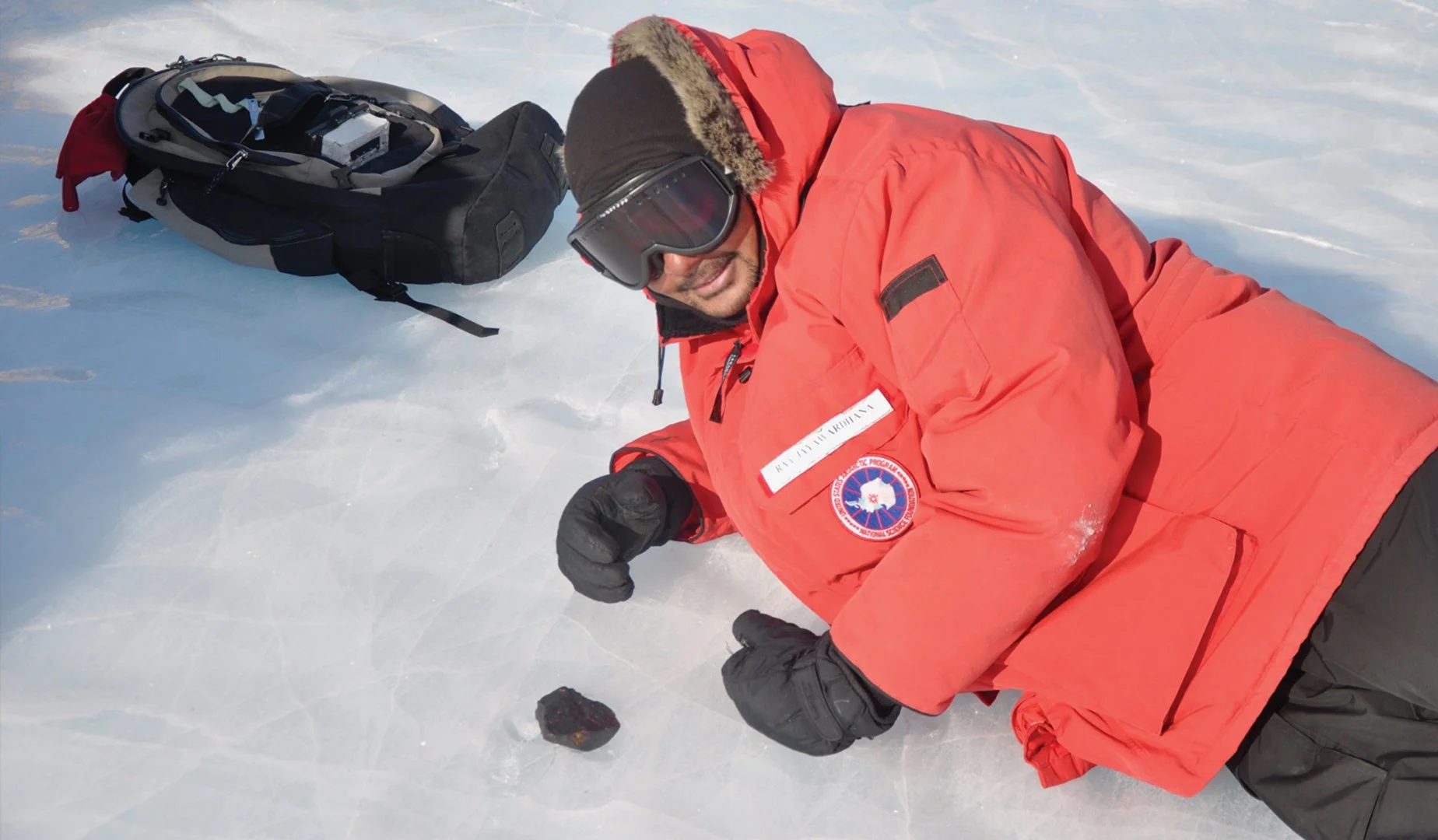
Ray Jayawardhana in Antarctica during an expedition in search of meteorites. Courtesy of Ray Jayawardhana.
What are some of your priorities as you prepare to begin your term?
First, let me say that I’m following in the footsteps of great leaders who have served Caltech well. Second, I begin with a deeply held commitment to safeguard, build upon, and amplify what sets Caltech apart.
The president can play a useful role in bringing people together and helping to identify where the Institute can have truly transformational impact. We should develop dynamic frameworks to understand our strengths, identify compelling opportunities, and focus resources, then recalibrate as the opportunities and the landscape evolve. I’m starting with listening and learning, and I’ve already enjoyed many inspiring conversations this spring.
One aspect I’m particularly excited about is expanding the kinds of investments that allow faculty and students to pursue blue-sky, high-risk ideas that wouldn’t otherwise take flight. Caltech is already doing that in a number of areas, and we should cover more of the waterfront.
At Cornell, thanks to philanthropic support, we launched a seed-funding program at a meaningful scale, $200,000 grants for up to two years, and the returns on investment were remarkable in terms of research outcomes and external funding that followed. You have to take risks and trust that a handful of these bets will take off in ways that are incredibly impactful. With the caliber of faculty at Caltech, and the collective ambition of this community, the potential for such ventures here is truly exceptional.
Lightning Round
Favorite dish to make or bake?
Tiramisu.
What’s something you’re trying to learn?
Tennis.
Best advice you have ever received?
The biggest room in the world is room for improvement. –Cyril Ponnamperuma [Sri Lankan-American scientist]
Where do you want to travel next?
Into orbit and to the bottom of the deep ocean.
Olympic event you most want to attend in 2028?
Track and field.
If you weren’t an astronomer, what would you have done with your life?
I’d probably have become a writer or journalist.