
The Cosmos in the Convention Center: Caltech Stars in Pasadena’s City of Astronomy Festival
Families and astronomy buffs enjoyed interacting with scientists from a stunning array of astronomy and space organizations in and near Pasadena, including from Caltech’s campus, JPL, and IPAC.
By Ann Motrunich
The marshmallows roasted without a campfire. Instead, the children gathered outside the Pasadena Convention Center watched as a curved mirror, like the kind found in telescopes, concentrated a light beam that puffed up and browned the sugary treats.
Other visitors lined up to observe the details of our sun through solar telescopes. Families gathered around a table to touch meteorites. Indoors, guests wearing virtual reality headsets visited a black hole and its event horizon (without getting spaghetti-fied by warped space-time).
It was all part of Pasadena’s City of Astronomy Science Festival on June 14. Caltech astronomers, planetary scientists, engineers, and technologists from the campus and JPL, which Caltech manages for NASA, brought their focus to Earth for four hours to share fundamental science and new discoveries with more than 2,000 Pasadena residents and visitors.
Later in the week, Caltech Astro presented three Astro on Tap events in Old Pasadena and Caltech’s IPAC center celebrated its birthday with hundreds of guests.
Cameron Hummels, a research scientist and director of astrophysics outreach at Caltech, organized activities for the festival in collaboration with Jeff Rich and Jessica Soto of Carnegie Observatories.
“Everyone was smiling and happy, enthusiastic about the science,” Hummels says. “I interacted with a lot of kids who were excited to be there. At one of the Caltech tables, the ‘What is Light?’ table, we had different light sources: incandescent, compact fluorescent, and LED bulbs and gas lamps. We gave the kids diffraction grating glasses. They effectively work like a prism to split up the light into its different component colors so you can see the so-called fingerprint of each of the light sources. Each one gives a different set of colors that you see when the light is split by the glasses. It looks really cool and demonstrates how all observational astronomy is done. The kids were super psyched.”
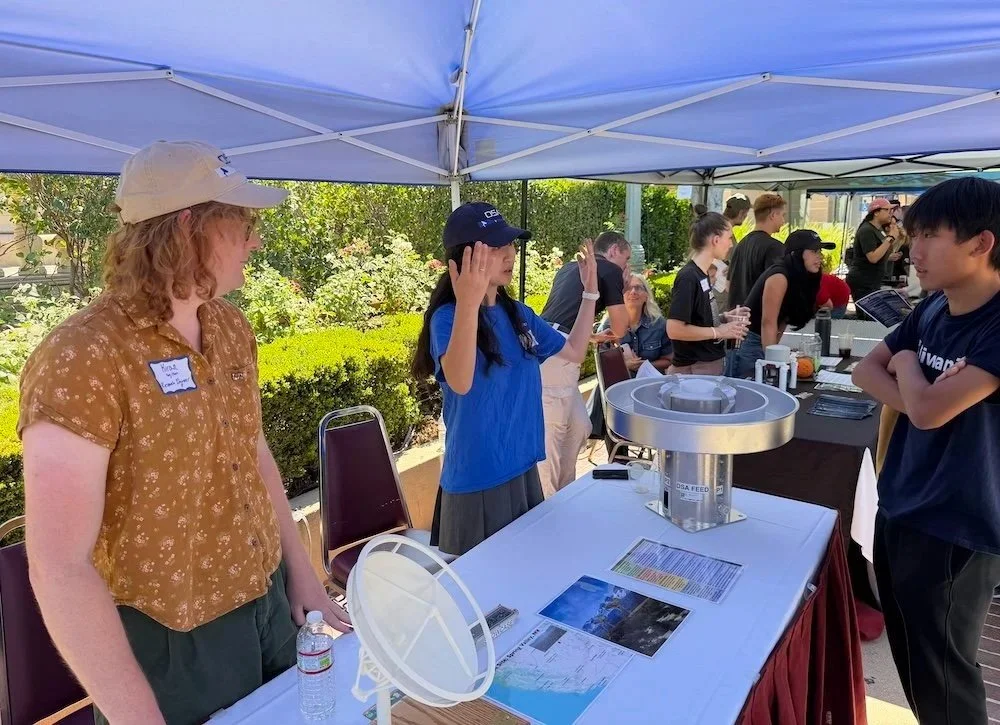
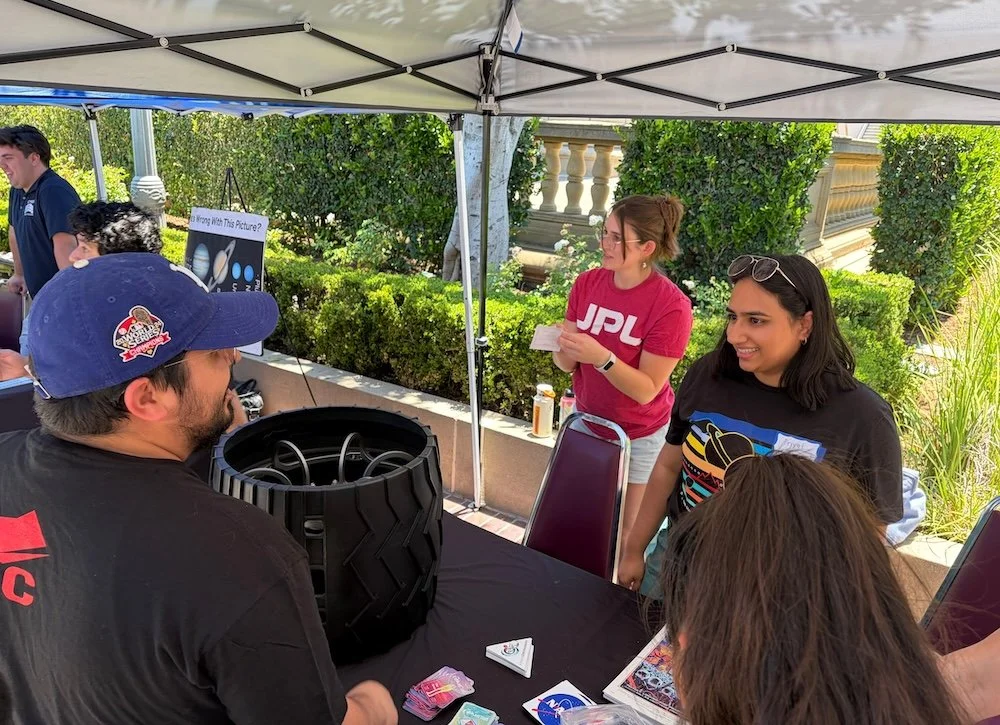

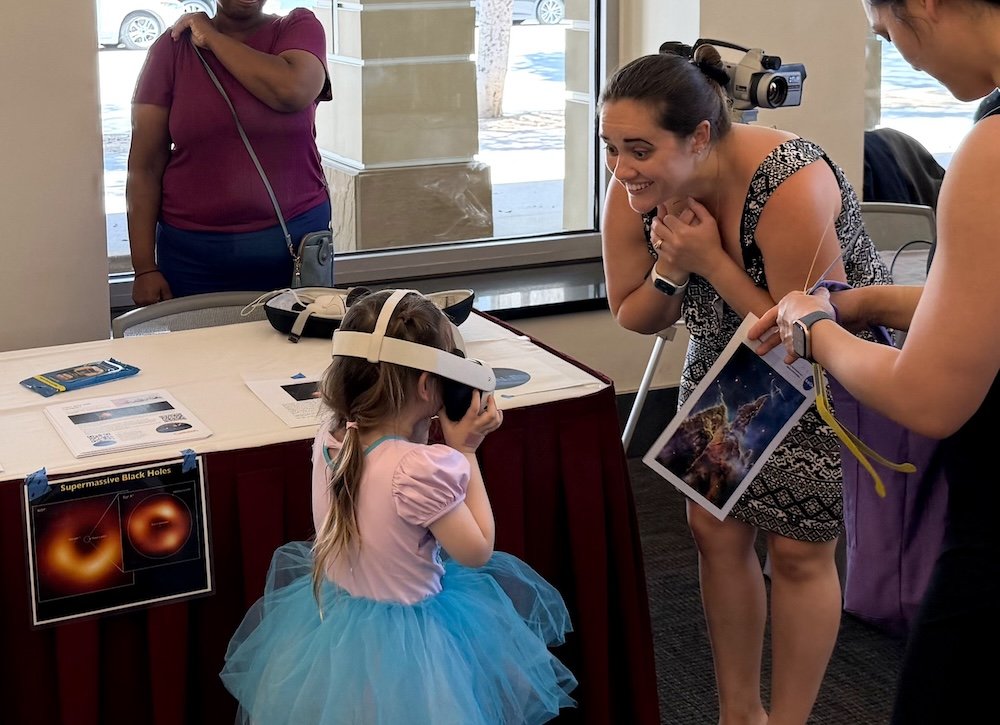
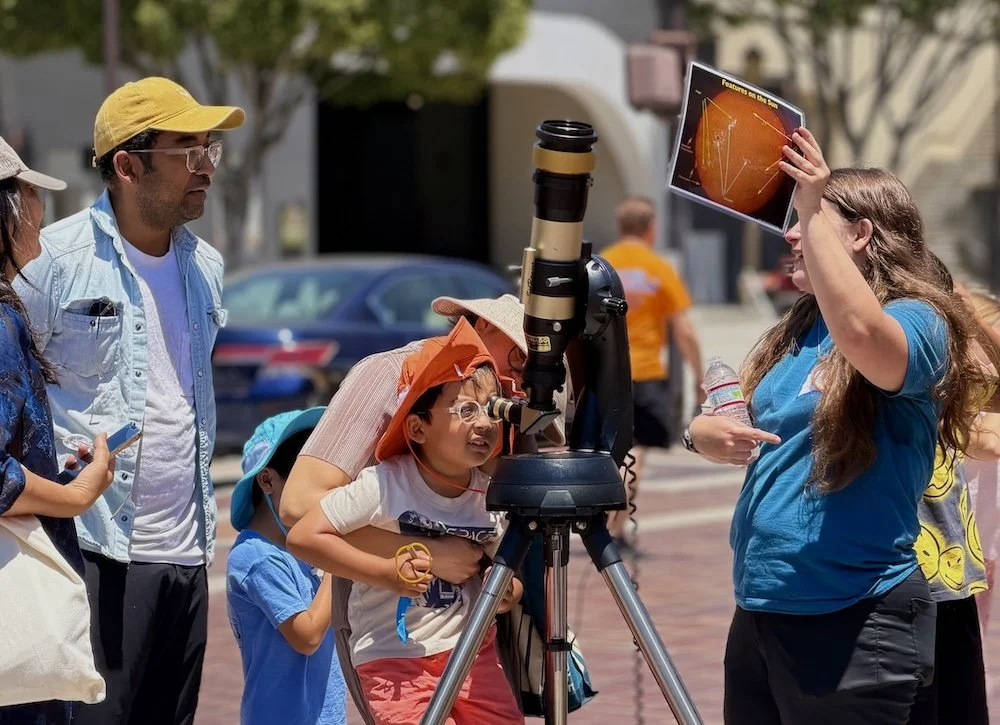
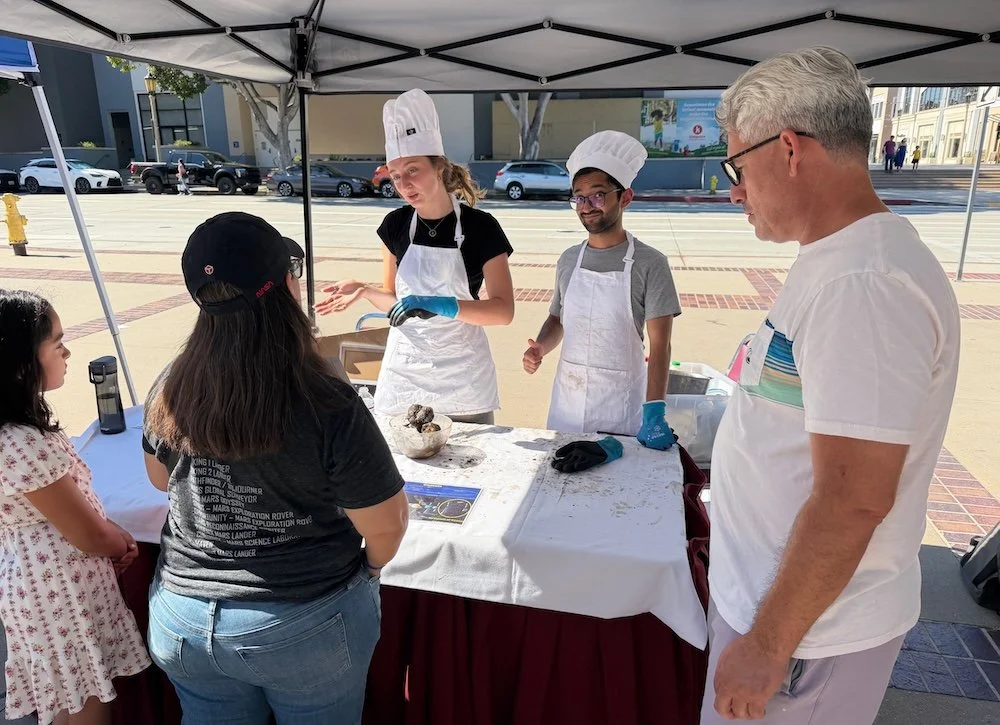

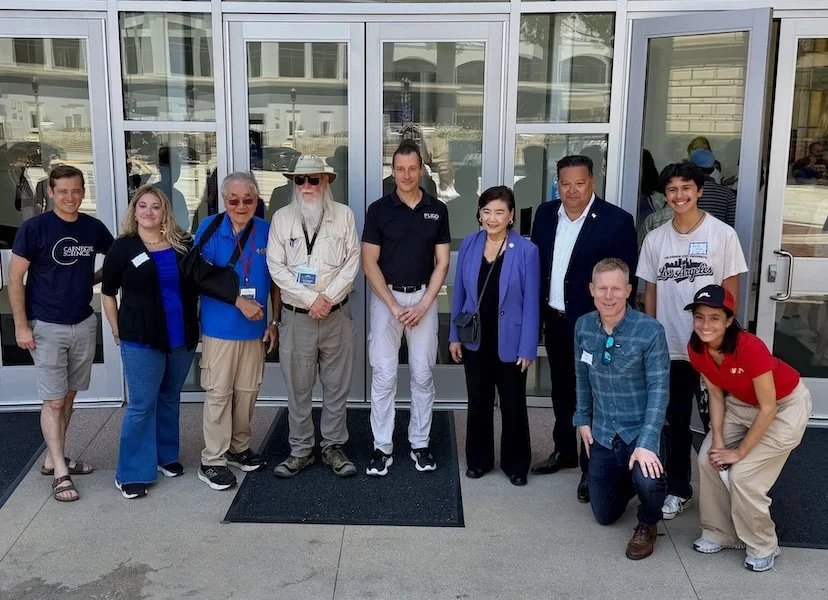
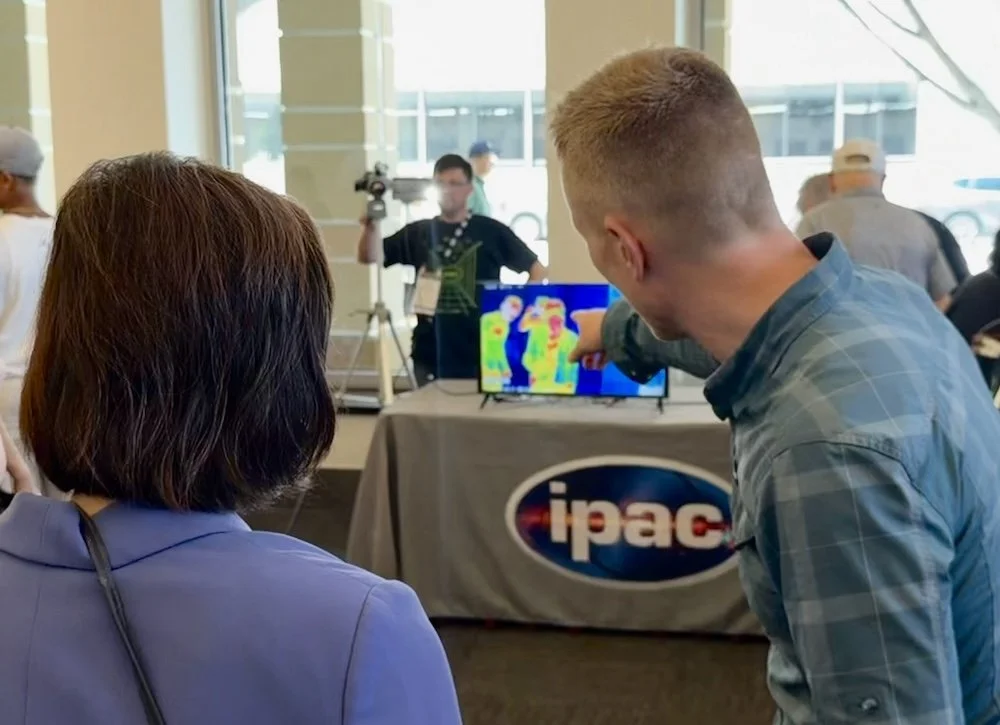

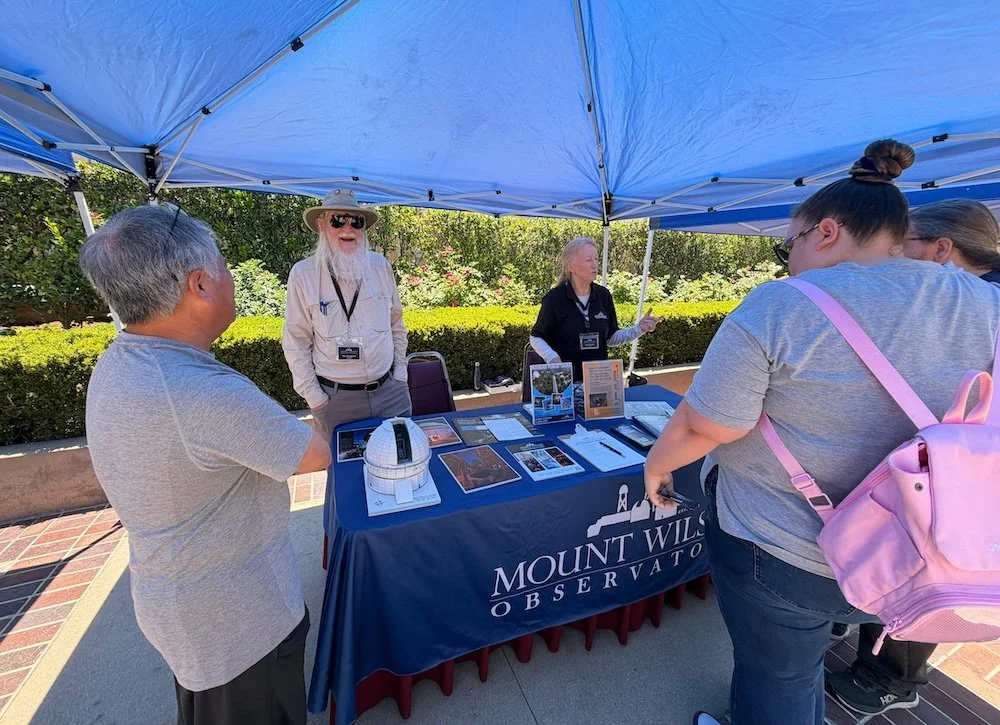
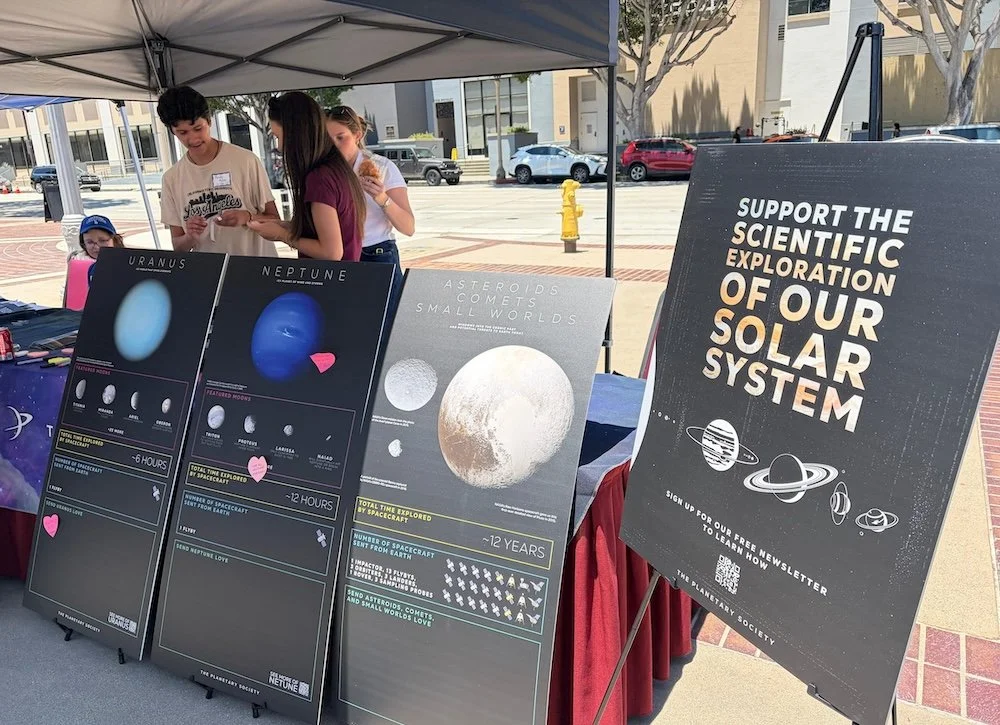
The festival was timed to coincide with an American Astronomical Society conference in Pasadena. Residents and visitors talked with representatives of world-class astronomy organizations focused in and near Pasadena. Caltech researchers and students shared their work and their next big ideas at 10 tables. They were hosted by five research groups, a team from JPL, staff from IPAC, and volunteers with the Caltech Astro outreach team.
The week’s celebration of astronomy also included a gathering for the 40th anniversary of IPAC, a science and data center on campus. IPAC has supported more than 20 astrophysics and planetary science missions, enabling major discoveries and introducing them to the world.
When citizen scientists and professional researchers search for evidence of Planet 9, exoplanets, supernovas, and other celestial objects, they use troves of data that IPAC processes and archives. The iconic nebula images from the Spitzer Space Telescope and visualizations from many other missions were created by IPAC staff members. They carefully translate the colors the telescopes can detect into the limited range of colors that human eyes can see, giving humanity new insight into the universe.
During the conference, Caltech Astro carried on the festivities on in Old Pasadena with three free, family-friendly Astro on Tap events on the patio of the Dog Haus Biergarten on June 15, 16, and 17. About 300 people attended each event. Astro on Tap nights feature two brief talks by working astronomers, pub trivia, and stargazing in a family-friendly environment. The events were the 150th, 151st, and 152nd in Caltech’s Astro on Tap series, which is celebrating its 10th anniversary.
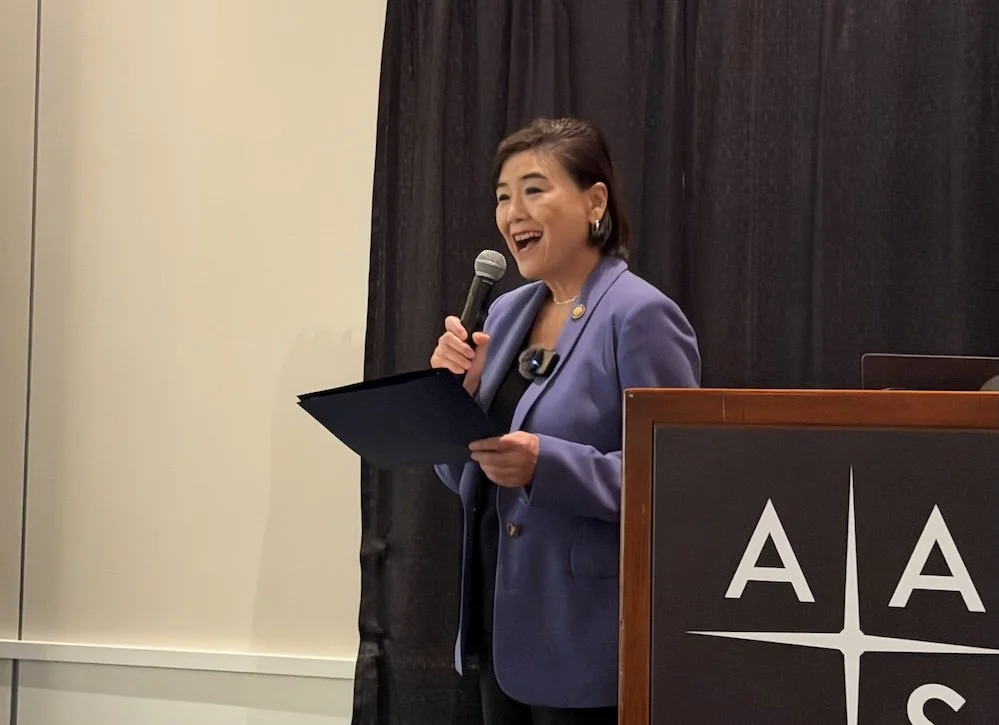
In addressing attendees at the City of Astronomy Festival, Pasadena Mayor Gordo bought focus to the city’s leading scientific and cultural institutions, which have attracted researchers, explorers, and innovators to the region for more than a century.
“I believe that Pasadena is in fact the center of the universe,” Gordo said, noting to the crowd that the floor of Mission Control at JPL is emblazoned with those words.“I tell people this because, what other city of about 145,000 or so residents can say, if you want to learn about the universe, go to Caltech. If you want to explore the universe, go up the street to JPL.”
Gordo continued on to explain how Caltech and JPL, alongside the Carnegie Observatories, and many other organizations and companies that are established in the city make Pasadena a destination for exploration and discovery. “Thank you all for making Pasadena a special place. Really, we’re doing the work. We’re exploring and understanding the universe.”