

Veronika Voss. Image: Keats Elliot.
By Sharon W. Tran
Veronika Voss, a rising second-year from a rural area without many STEM opportunities, knew she wanted to find mentorship the moment she joined Caltech.
Fortunately, during Voss’s first year, the Institute’s Career Achievement, Leadership, and Exploration (CALE) office launched a new initiative: the CALE Alumni Mentoring Program (CAMP). This six-week virtual experience connects Caltech alumni with current students and fosters weekly conversations designed to accelerate career readiness. Voss was part of CAMP’s inaugural cohort in winter 2025.
“Joining CAMP gave me the chance to connect with mentors and to build and maintain a meaningful mentor–mentee relationship,” Voss says.
To facilitate CAMP’s success, the Caltech Alumni Association (CAA) and CALE launched a new platform, the Techer Professional Network (TPN), to optimize alumni and student connections. Formerly known as the Alumni Portal, TPN now hosts CAMP; features a robust job board curated by CALE for Caltech alumni, students, and postdocs; and organizes opt-in regional groups for pilot areas such as Seattle, Silicon Valley, Boston, Washington, D.C., and Singapore to support localized networking.
“Think of the Techer Professional Network as Caltech’s dedicated LinkedIn,” says James Knutila, director of alumni communications and marketing programs in Advancement and Alumni Relations. “It’s an exclusive community where students and alumni across various career stages and industries can connect, explore opportunities, and grow in their careers.”
Through the TPN portal, potential alumni mentors and student mentees are paired after completing CAMP matching questionnaires. After an initial training, hosted on Zoom, the mentor and mentee pairs are encouraged to arrange five meetings over the course of five weeks. CALE provides questions to guide the mentoring meetings, and students are asked to write and submit reflections after each meeting.
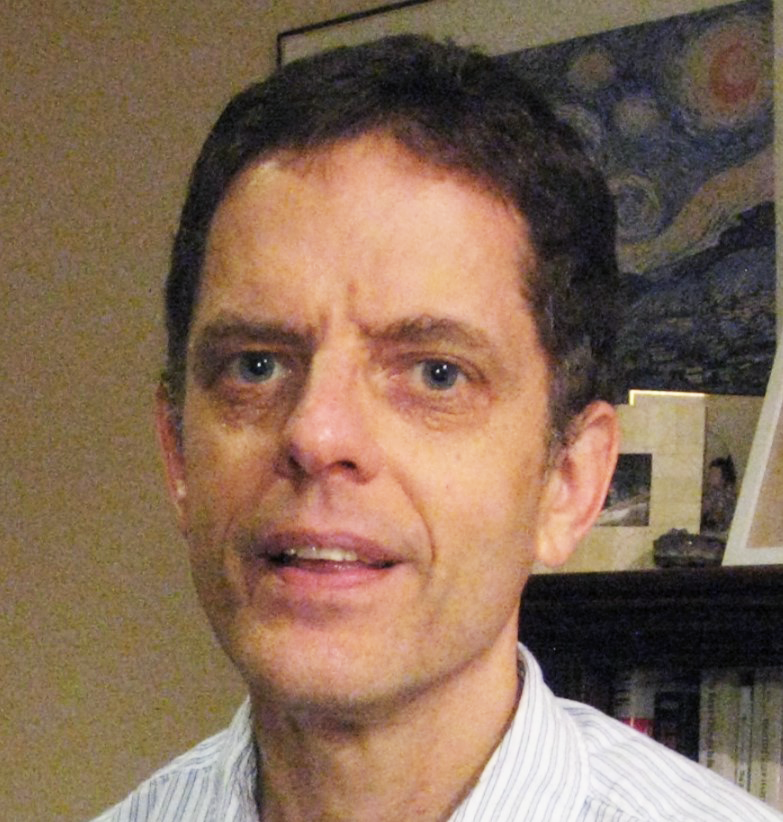
Mark Fischman. Courtesy Fischman.
Mark Fischman (BS ’89), a veteran JPL radar system engineer who most recently contributed to Europa Clipper and has experience as a Summer Undergraduate Research Fellowships (SURF) mentor, looked forward to mentoring a Caltech undergraduate. When paired with Voss, Fischman was impressed.
“She had just completed her first term of her first year and was really proactive,” Fischman notes. “First of all, she was part of this CAMP mentorship program, which was maybe more oriented toward students who are looking to graduate and thinking about jobs. She was very enthusiastic about getting an undergraduate research fellowship. She was going out and doing interviews, and she was able to get a role in a lab for the summer.”
Fischman understands the importance of having a supportive network in his own career trajectory. He cites the positive impact of having a peer mentor who helped him during graduate school at the University of Michigan. Fischman also benefited from both formal and informal JPL mentoring opportunities.
For Voss, mentoring conversations with Fischman gave her a new perspective.
“The term we met, I was struggling with a particularly difficult class, and it was incredibly reassuring to hear about both his challenges and his triumphs as an undergraduate,” Voss says. “He encouraged me to give myself grace. Beyond that, it was powerful to see someone in a position I aspire to be in. His mentorship offered hope and a guiding voice to remind me that my goals are more within reach than I ever could have dreamed.”
The mentoring relationship between Fischman and Voss is what Anna Resnick (BS’19) hoped for when creating this program.
“For mentees, the goal is to get career advice, feel more confident in what their career decisions are, or gain understanding of what the world is like after graduation,” Resnick says. “For mentors, it’s the fulfillment of giving back and, surprisingly, a desire to help build the foundation of the program.”
In its inaugural year, CAMP paired 298 mentors and mentees. As participants look ahead to future cohorts and iterations, its early impact is already clear. “Mentorship has reminded me that I don’t have to navigate challenges alone and that encouragement and guidance can make all the difference,” Voss says.