
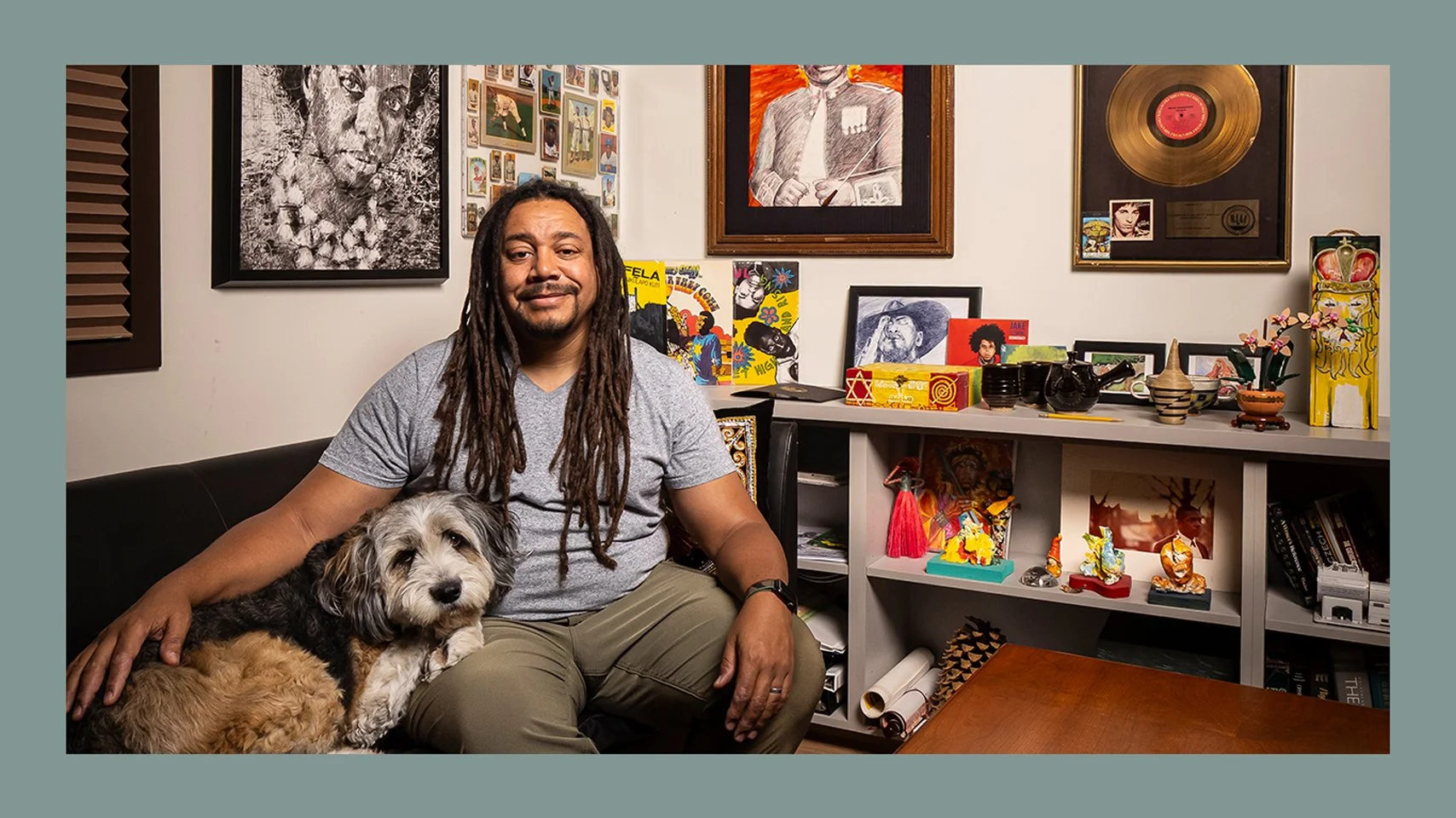
Bil Clemons in his office with his dog, Mila. Credit: Bill Youngblood.
Music and mentorship can be found in the office of this biochemist.
By Omar Shamout
If you were to walk into Bil Clemons’s office in Braun Laboratories, it is likely that his 6-year-old Aussie doodle, Mila, would be the first to greet you. “The students love interacting with Mila,” says Clemons, a Caltech biochemist. “You can tell she’s friendly when she first meets you.”
Meeting with students is important to Clemons, who, in 2024, received the Institute’s Shirley M. Malcom Prize for Excellence in Mentoring. “In terms of being empathetic, relating to students, and helping them see where their potential is, I like to think that those are things that I do well,” he says.
The students in Clemons’s lab help him investigate life on the molecular scale using structural biology tools such as X-ray crystallography to study viruses called phages that specifically infect bacteria. Some phages produce peptide inhibitors that kill bacteria by breaking the cell-wall machinery in a way similar to penicillin. “We put a lot of energy toward understanding how certain phages have evolved to have the ability to kill bacterial cells with proteins that act as inhibitors,” says Clemons, Caltech’s Arthur and Marian Hanisch Memorial Professor of Biochemistry, who joined the Institute in 2005. “I believe future discoveries about this evolutionary process will be transformative in our ability to combat bacteria.” He explored this topic in an October 2024 Watson Lecture titled “Combating Future Pandemics with Viruses.”
Clemons received his bachelor’s degree from Virginia Tech and a PhD in biochemistry from the University of Utah, where he worked under Venki Ramakrishnan, who shared the 2009 Nobel Prize in Chemistry for research on the structure and function of ribosomes. Clemons contributed to this work as a graduate student, and the findings led to a greater understanding of genetic code translation. “I was his first PhD student at a time when we both were new to Salt Lake City,” Clemons says of Ramakrishnan. “Venki had just moved with his wife, and their kids were already out of the house, so I became a sort of an extended family member.”
Clemons believes that helping students find a sense of belonging on campus is crucial to their success. In an effort to fortify the Caltech community, he helped organize Caltech’s Black Lives Matter program in June 2020, facilitated the work of Black Scientists and Engineers of Caltech, and helped found Black@Caltech. “Chosen or not, a large part of my career is trying to make science more equitable for everybody and bringing as many people into the fold as I can,” he says.
Clemons’s sense of self is also evident in his workspace. “Being one of the few Black professors at Caltech, I think it’s meaningful to people that I have representation of that in my office,” Clemons says. A piece of Clemons’s identity was forged at age 15, when he decided to drop the second “L” in his first name. “As a kid, I went by Billy, and I didn’t want to be Billy anymore. But I also didn’t want to be Bill, which was my dad’s name,” he recalls. “The beauty of it was, whenever my friends would call the house, they’d just ask for ‘Bil with one L.’”
Visitors to Clemons’s office are often greeted by music—artists such as De La Soul, John Coltrane, and Jimmy Cliff are in regular rotation. Musician Nina Simone also gazes out from above the couch in the form of a print by artist Jeffrey Pierson. “She was somebody who attracted very large, diverse audiences but never shied away from being overtly proud of her identity,” Clemons says.
Music is central to the Clemons family story: Clemons’s father, Bill Sr., played in and served as a band director in the Marine Corps. His uncle Clarence was the saxophonist for Bruce Springsteen and The E Street Band from 1972 until his death in 2011, at which point Bil’s younger brother Jake took over.
As for his interest in discovery, Clemons says that came in part from encyclopedias. When he was young, a door-to-door salesman sold his family a set, and he would spend hours poring over the wonders inside. Clemons even took a summer job selling encyclopedias while in college. “Growing up in that era without internet, having those encyclopedias was really a window into the world,” he says. “I would just hang out, pick a different letter, and comb through it. I was a curious kid, and learning about new things always gave me a lot of satisfaction.”
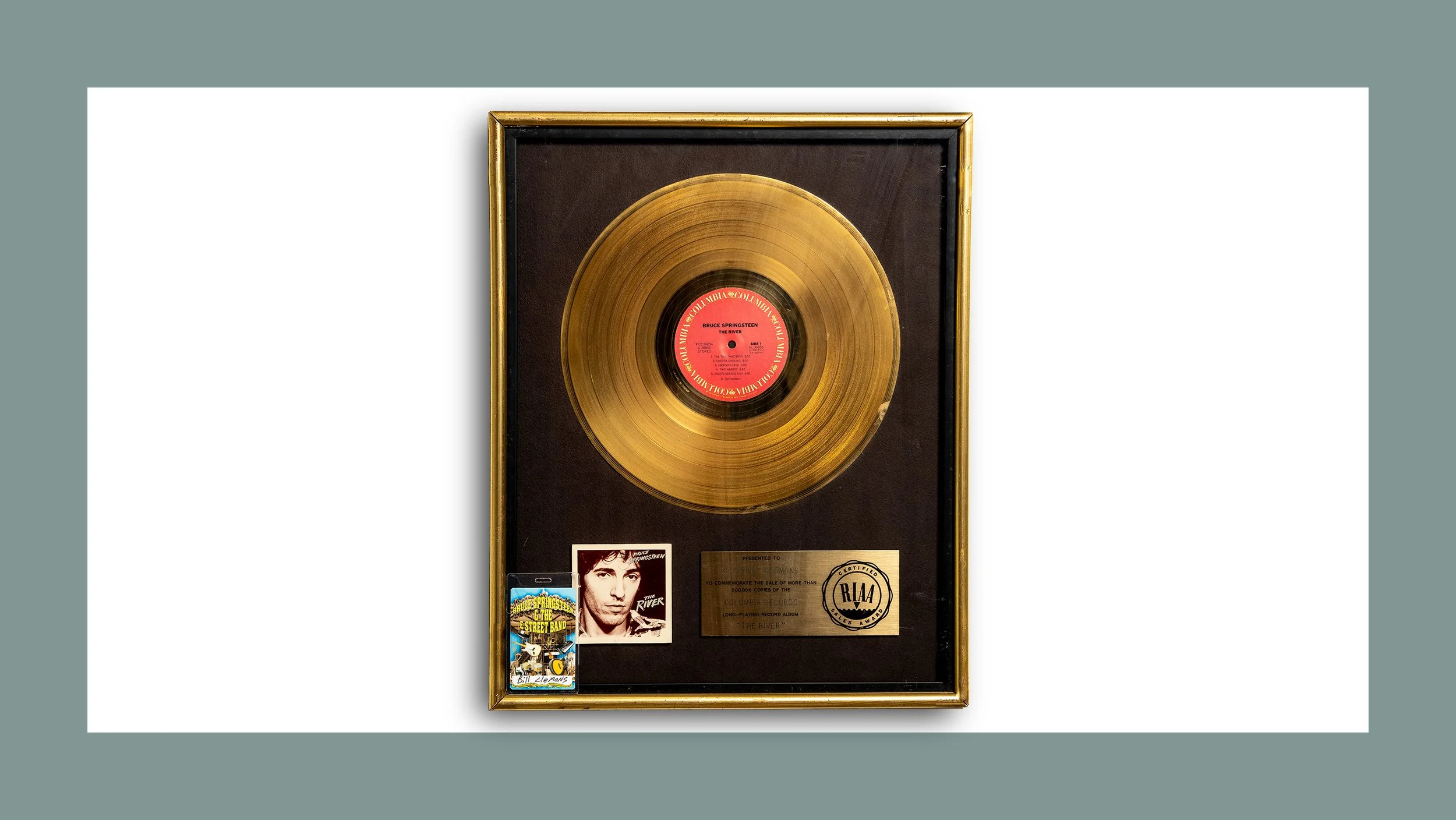
Bruce Springsteen and the E Street Band, The River, gold record
Columbia Records presented this honorary gold record—commemorating the success of the 1980 album—to Clemons’s uncle Clarence, the band’s saxophonist. “I don’t remember him not being famous,” Clemons says. “I never thought anything about it, but there were moments where you’d be backstage at a concert, and there are 50,000 people shouting for your uncle, and it’s like, ‘Oh, that’s cool.’ He always had a distinct sound. You’d hear the sax and say, ‘OK, that’s Clarence Clemons.’”
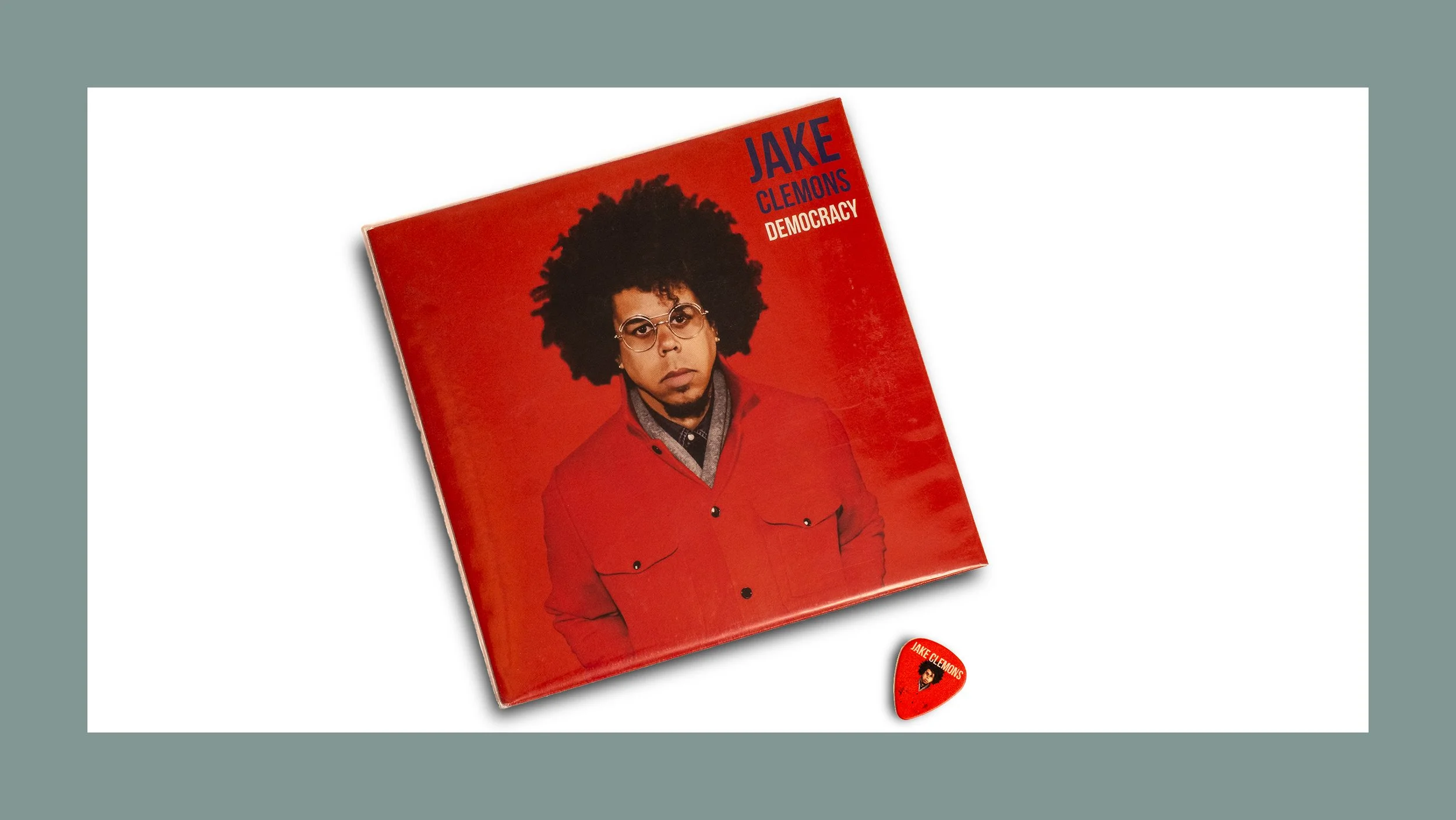
Jake Clemons, “Democracy”
Clemons showcases this single, a reinterpretation of a 1992 Leonard Cohen song, from his brother Jake’s 2019 solo album, Eyes on the Horizon. Jake took over for Clarence Clemons as saxophonist for the E Street Band in 2012. “My brother is a natural entertainer. He always brightens a room when he comes in because his energy is super positive,” Clemons says. “When he joined the band, it really changed the tours. My dad could play any instrument, and my brother is similar. On his own albums, he plays everything.”
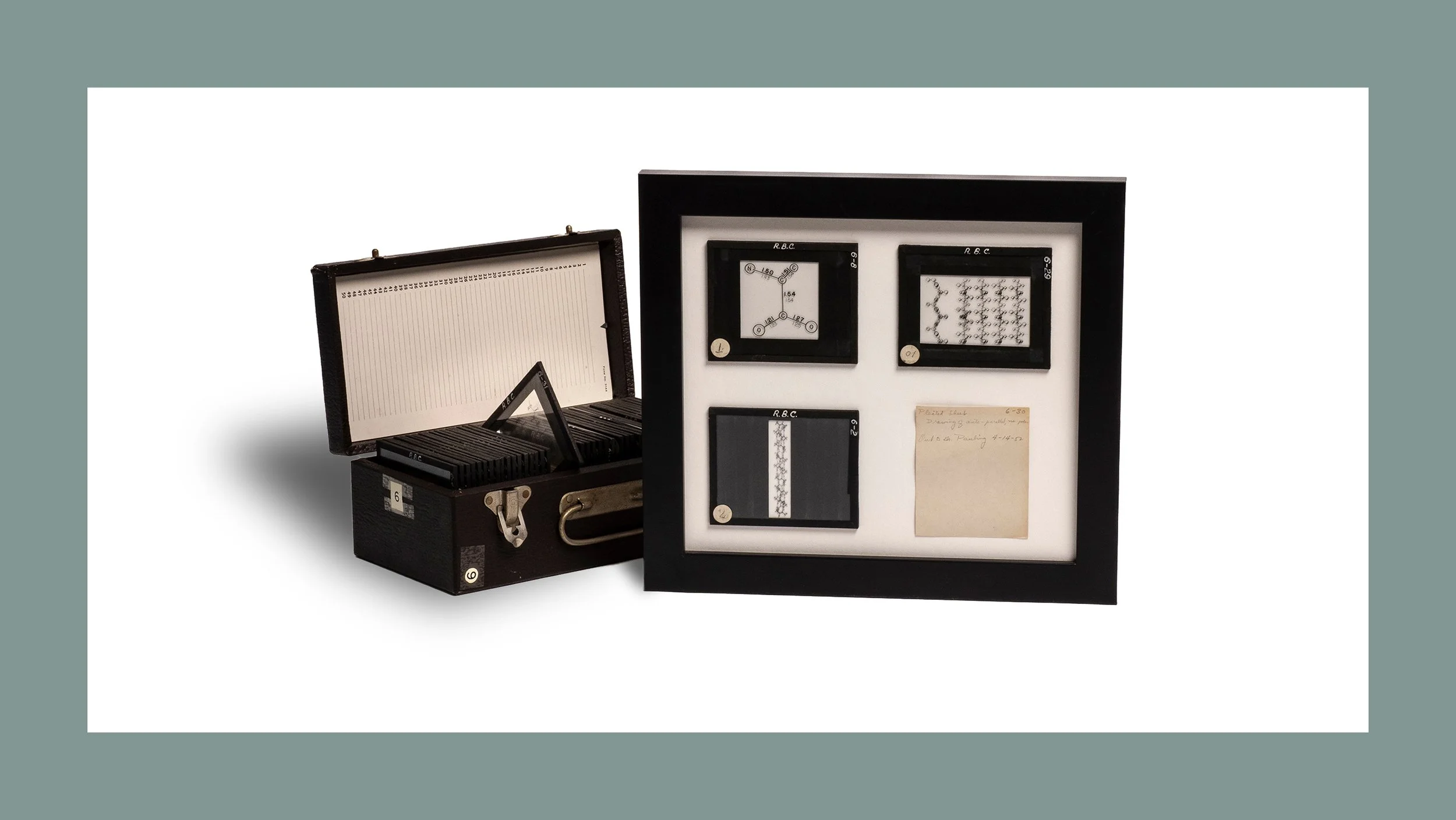
X-ray crystallography image of alpha helix
Structural biologists like Clemons create three-dimensional molecular models based on experimental data, often obtained by shooting protein crystals with X-rays and measuring how those X-rays scatter. In the frame are slides made by Robert Corey, a former professor of structural chemistry at Caltech. In the 1950s, Corey, together with Caltech professor of chemistry Linus Pauling (PhD 1925) and visiting researcher Herman Branson, discovered the basic units of protein structure. The framed slides highlight the planar nature of the peptide bond, the alpha helix, and a beta sheet. “These images represent the birth of protein structure, which happened here at Caltech,” Clemons says. “Branson was a Black man on sabbatical here under Pauling. The three published the paper that described the alpha helix for the first time, and subsequent work from Corey and Pauling described the beta sheet.”
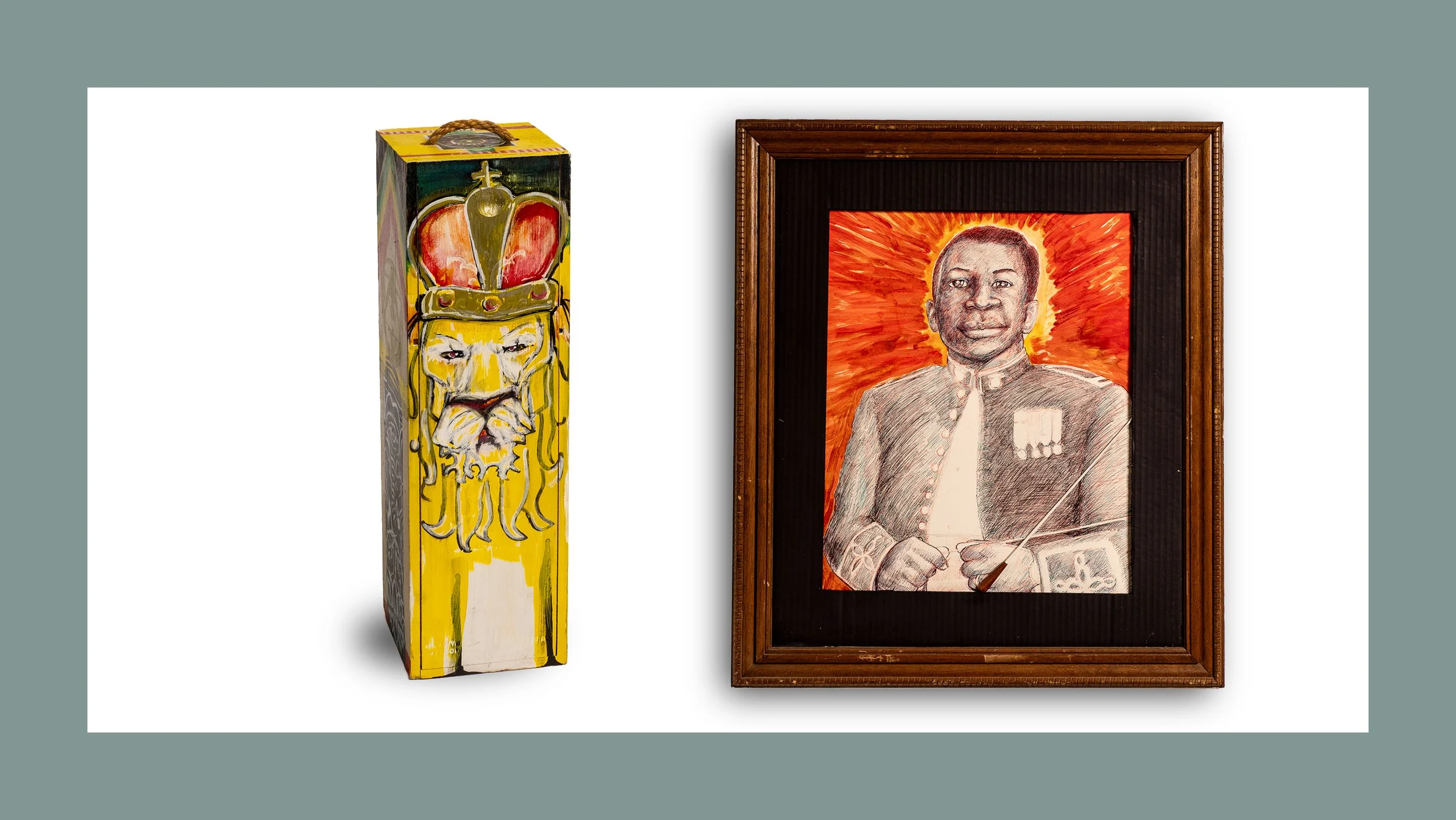
Quincy Clemons artwork
Clemons has on display several pieces of art by his brother Quincy, an LA-based artist who goes by the moniker Unyenz. The works include a drawing of their uncle Clarence; a box painted with Rastafarian imagery; and a portrait of their father, Bill Sr., who was a band director in the Marine Corps. “My dad enlisted, but he was a music major in college. He played saxophone, which is kind of the family instrument, but he could also play the flute and piccolo, which they needed for the marching band. Eventually, he became the officer that oversaw the band, and he was the conductor.”
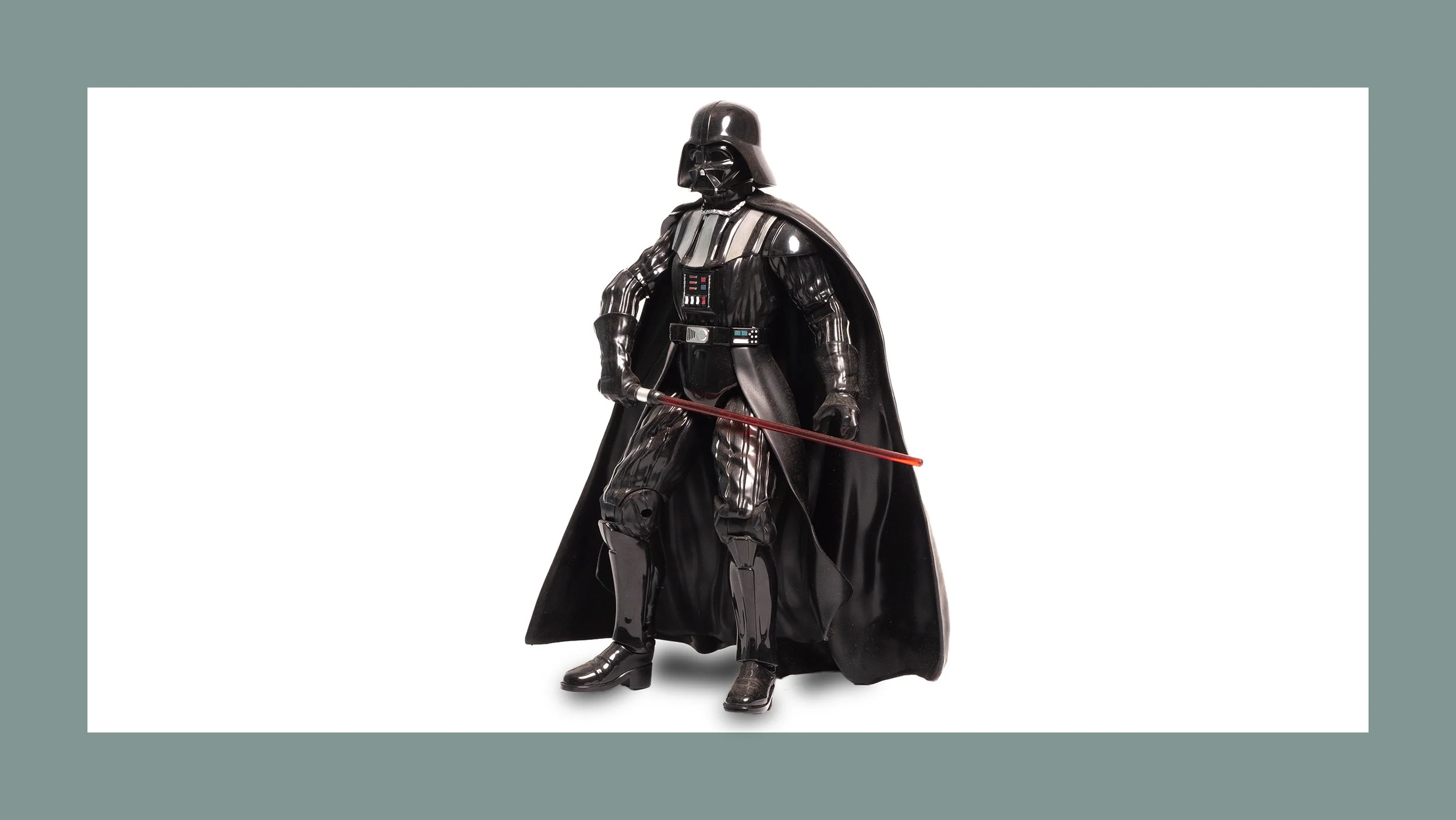
Darth Vader action figure
Clemons is a fan of the Star Wars franchise. A former student gifted Clemons this large figurine, which also speaks lines of dialogue from the movies. It sits beside his desk next to a replica light saber. “This student asked me, ‘Oh, do you think your kids will like this?’ My kids didn’t care, but I was like, ‘I’m going to keep that!’”