

This series of profiles highlights scientists, engineers, and innovators who have made Caltech JPL a center for American excellence.
by Lori Dajose (BS ’15)
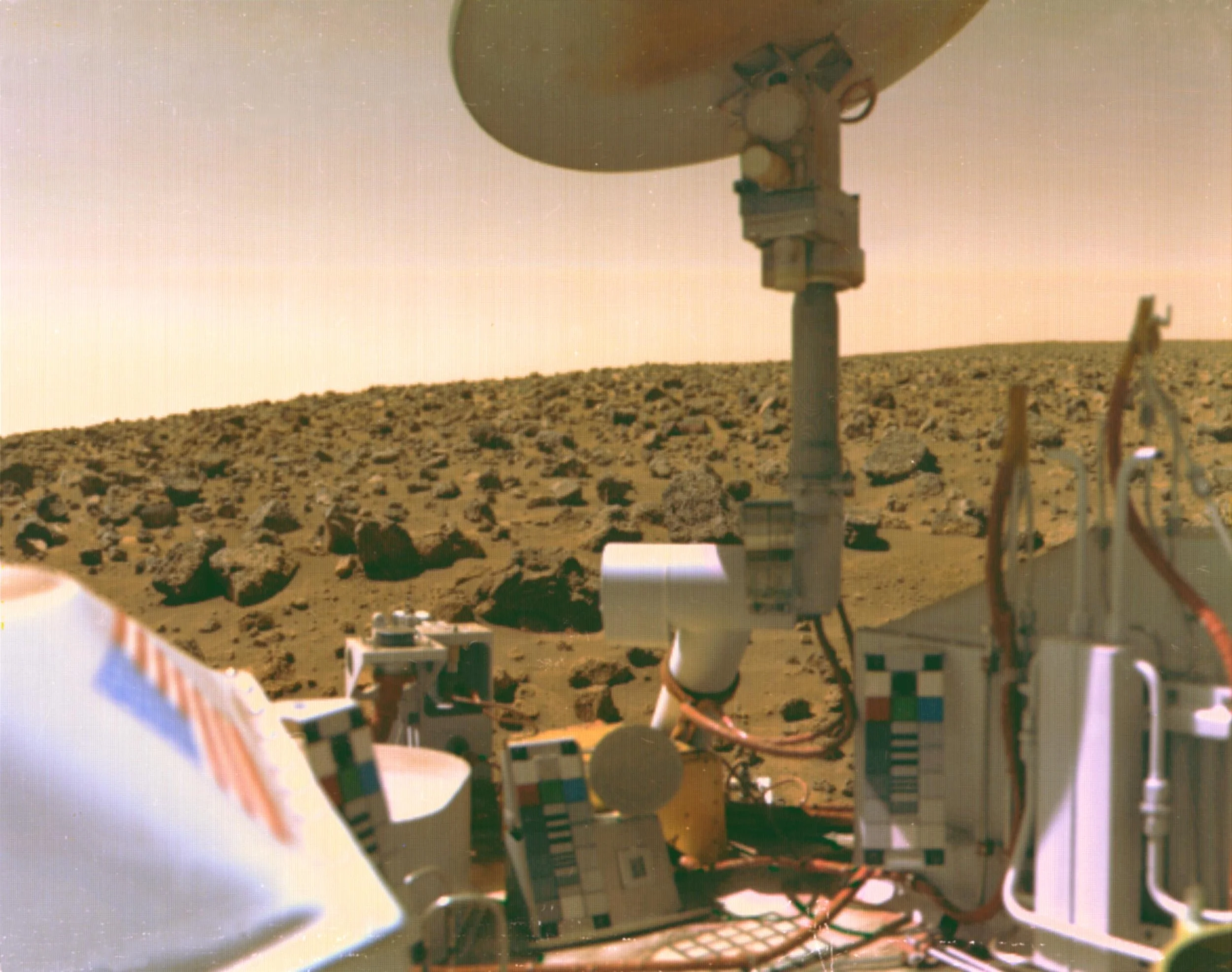
The red boulder-strewn field reaches to the horizon nearly 2 miles from Viking 2 on Mars’s Utopian Plain. Credits: NASA/JPL-Caltech
Ashwin Vasavada (PhD ’98), the project scientist on NASA’s Curiosity Mars rover mission, was 10 years old when he saw the surface of Mars for the first time. Sifting through a book on stars and planets, his attention was caught by an image of a robotic lander with an American flag and an antenna pointing back at Earth from a rusty, boulder-strewn landscape. The image, taken in 1976 by the Viking 2 lander—the first mission to land successfully on Mars—sparked Vasavada’s lifelong passion for planetary science.
“I was so captivated by the idea that there was this whole other world out there, a planet you could theoretically walk out on, pick up a rock, and throw it—a whole other place besides Earth,” he says. “The fact that we could send this lonely robot out there to be our emissary to another world, it just blows your mind and gives you the idea that you could go explore these places, too.”
Viking 1 and its companion mission Viking 2 were operated at the Jet Propulsion Laboratory (JPL), which Caltech manages for NASA. But before Vasavada would find himself at the Laboratory as well, he conducted undergraduate research at UCLA focused on Mars’s ancient climate with Professor of Planetary Science David Paige (PhD ’85).
“Dave would take me up to JPL and show me around, and we would stay up all night to write these competitive mission concepts, trying to get them selected by NASA,” Vasavada recalls.
Because of Caltech’s inextricable relationship with JPL, including faculty involvement in its missions, Vasavada was thrilled when he was accepted into Caltech for graduate school. Like Paige, he would be advised by Andy Ingersoll, at the time a professor of planetary science. Vasavada had planned to focus his graduate work on data from NASA’s recently launched Mars Observer orbiter, but on the day he was set to move to Pasadena in 1993, the mission failed just shy of reaching its destination.
At the time, Ingersoll, now retired, was on the science team of NASA’s Galileo, a JPL-managed mission en route to reach Jupiter and its moons in 1995. A giant gaseous planet with no solid surface, Jupiter is totally different from Mars, but Vasavada jumped at the opportunity.
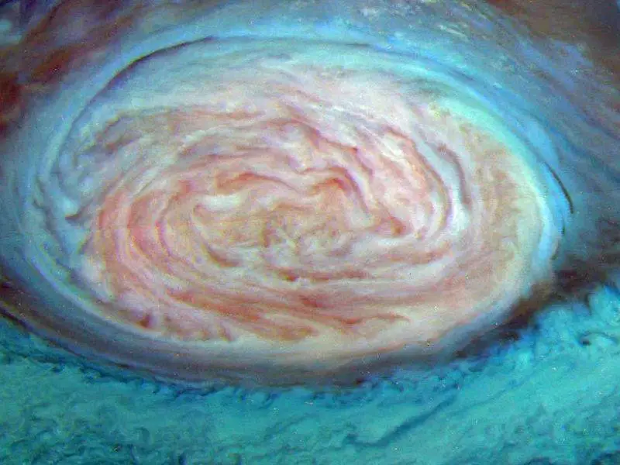
False-color infrared image of Jupiter’s Great Red Spot. Credits: NASA/JPL/Cornell University
“That was my first chance to be a scientist on an active mission,” he says. “Andy and I would sketch out where we wanted Galileo’s camera to point, how many pictures to take, what filters to use, and work with JPL to send up the commands. I would camp out in my office in a Caltech subbasement at midnight as the images were getting beamed back to Earth and be the first human in the universe to see those pictures of Jupiter’s swirling storms, lightning, and aurorae. I guess that was the moment when it came full circle to that Viking picture I saw as a 10-year-old. I never wanted to sleep when those pictures were coming in the middle of the night.”
The experience taught Vasavada about how an active space mission operates and how hundreds of scientists around the world are able to ask and answer scientific questions because of the incredibly complex engineering feats carried out at JPL. So when Mars beckoned again in 2004 with NASA’s Mars Science Laboratory mission and its Curiosity rover, Vasavada accepted the role of deputy project scientist, working with Project Scientist John Grotzinger, at the time Caltech’s Fletcher Jones Professor of Geology (now Harold Brown Professor of Geology).
Hundreds of JPL scientists and engineers worked on building the rover, collaborating with Caltech scientists to provide technical expertise on everything from the scientific instruments it carries to the systems that would help the rover withstand the forceful landing through the Martian atmosphere.
On August 5, 2012, as Curiosity approached Mars, Vasavada sat tense in JPL’s mission control with dozens of other scientists and engineers clad in matching periwinkle polos. The energy was electric. The mission hinged on Curiosity coming safely through “seven minutes of terror,” during which the rover would hurtle through the Martian atmosphere without any real-time communication.
The team waited through those seven minutes in silence until one engineer spoke.
“Touchdown confirmed—we are safe on Mars!”
Engineers had gotten the rover safely to Mars; now the spotlight was on the scientists to use Curiosity to answer Martian mysteries.
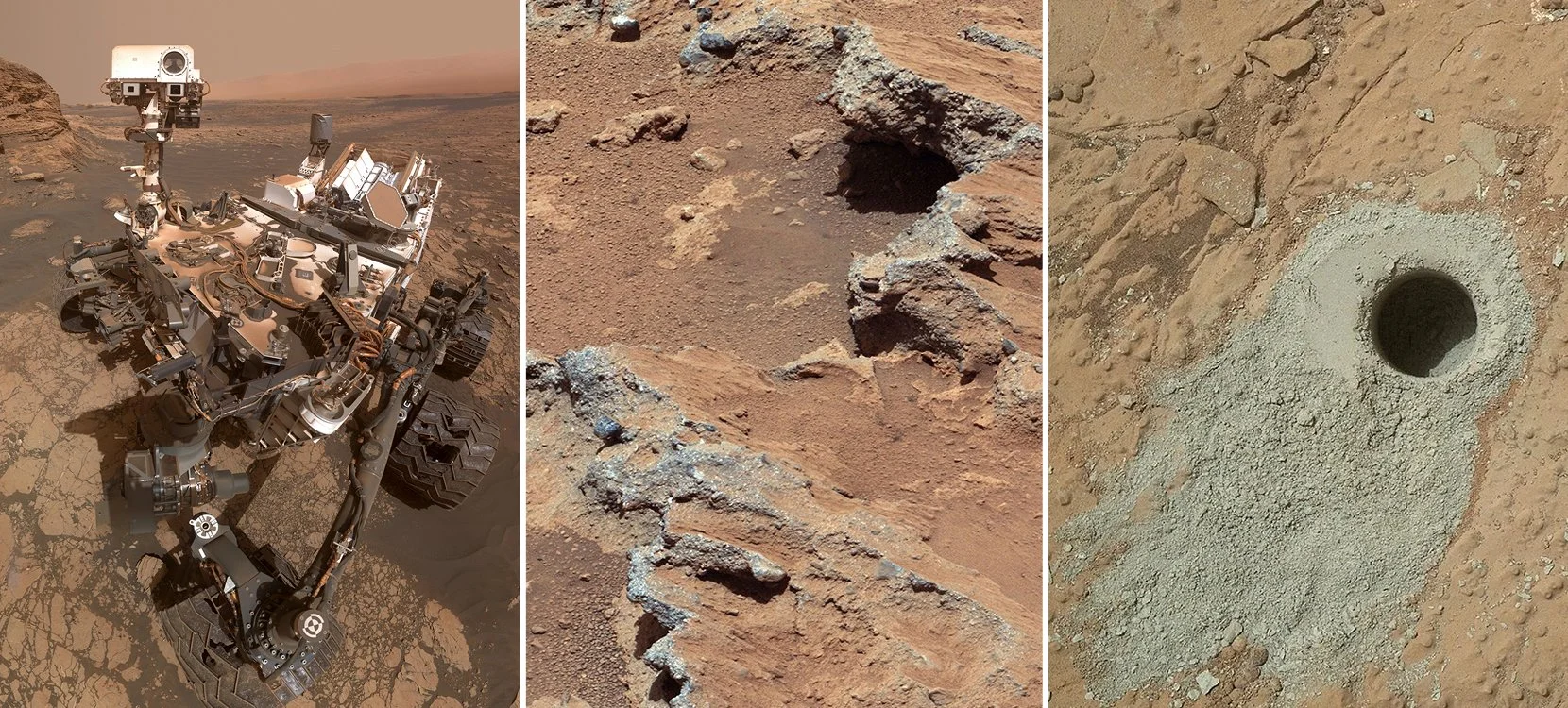
NASA’s Curiosity Mars rover used two cameras to create this selfie in front of Mont Mercou, a rock outcrop that stands 20 feet (6 meters) tall. Credits: NASA/JPL-Caltech/MSSS
Built and managed by JPL, NASA’s twin Spirit and Opportunity rovers had discovered evidence for past water on Mars after landing in 2004; Curiosity’s main goal was to determine whether the planet ever hosted the conditions that could have supported microbial life in the past.
The SUV-sized Curiosity landed within Mars’s Gale Crater with the goal of ascending Mount Sharp, named informally for the late Caltech geologist Robert P. Sharp. The primary mission was two years, but the rover was designed to last years longer. Today, 14 years later, Curiosity is still making its way up Mount Sharp, traveling through time across the mountain’s exposed stratigraphic layers and using the autonomous science laboratories inside of its body to analyze the ancient Martian environment. Far more advanced than other missions sent to Mars, the rover’s design formed the basis for the Mars 2020 Perseverance rover, which is collecting rock samples for potential future return to Earth.
In the years since Vasavada became Curiosity’s project scientist in 2015, the mission has analyzed rock representing many millions of years of Martian history and has discovered that the Red Planet did indeed host habitable environments that persisted over time. Though no mission yet has definitively discovered evidence of past life, Curiosity has played a critical role in answering major scientific questions.
“I’ve had the opportunity to move on to other things, but I just couldn’t leave Curiosity,” he says. “The rover continues to do amazing work. We haven’t exhausted the possibilities for discovery on Mount Sharp. It’s hard to imagine something more fulfilling than this team, this rover, and the science we’re doing.’
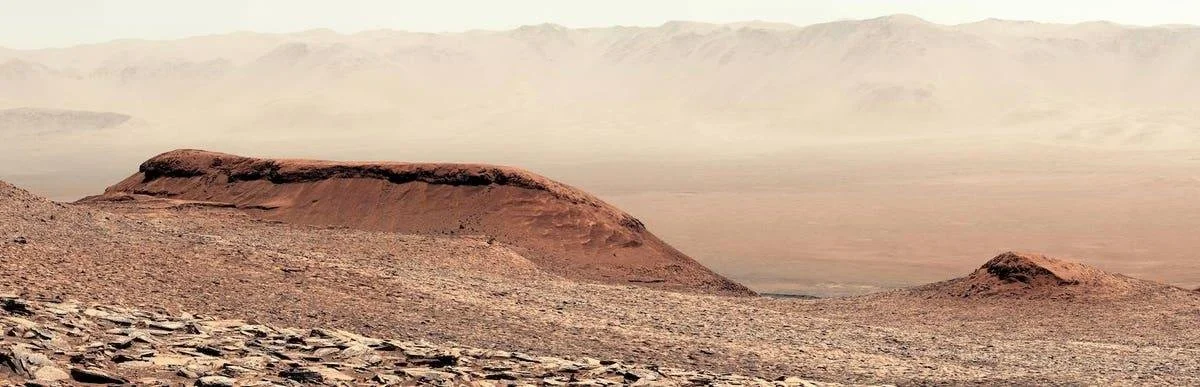
NASA’s Curiosity Mars rover captured this view looking back down at the floor of Gale Grater from its location on Mount Sharp on Feb. 7, 2025. Credits: NASA/JPL-Caltech/MSSS